PIPA5102818
RAG2 Polyclonal Antibody, Invitrogen™
Manufacturer: Thermo Scientific
Select a Size
| Pack Size | SKU | Availability | Price |
|---|---|---|---|
| Each of 1 | PIPA5102818-Each-of-1 | In Stock | ₹ 46,858.50 |
PIPA5102818 - Each of 1
In Stock
Quantity
1
Base Price: ₹ 46,858.50
GST (18%): ₹ 8,434.53
Total Price: ₹ 55,293.03
Antigen
RAG2
Classification
Polyclonal
Conjugate
Unconjugated
Gene
RAG2
Gene Alias
RAG 2; Rag2; RAG-2; recombinase activating gene 2; recombination activating gene 2; recombination activating protein 2; V(D)J recombination-activating protein 2
Host Species
Rabbit
Purification Method
Affinity chromatography
Regulatory Status
RUO
Gene ID (Entrez)
19374, 295953, 5897
Content And Storage
-20°C
Form
Liquid
Applications
Immunohistochemistry (Paraffin), Western Blot
Concentration
1 mg/mL
Formulation
PBS with 50% glycerol and 0.02% sodium azide; pH 7.4
Gene Accession No.
P21784, P55895
Gene Symbols
RAG2
Immunogen
A synthesized peptide derived from human RAG2(Accession P55895), corresponding to amino acid residues Q16-S66.
Quantity
100 μL
Primary or Secondary
Primary
Target Species
Human, Mouse, Rat
Product Type
Antibody
Isotype
IgG
Related Products
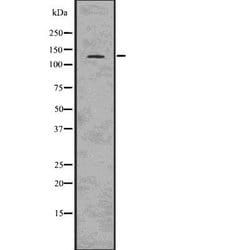
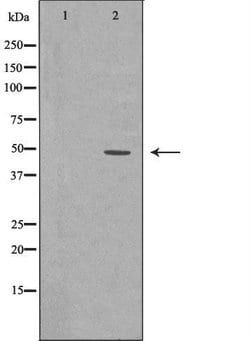
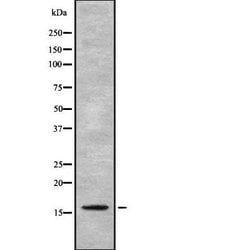
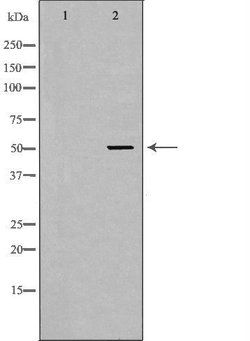
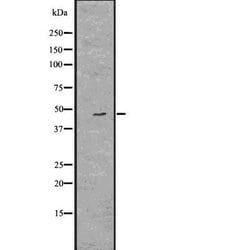
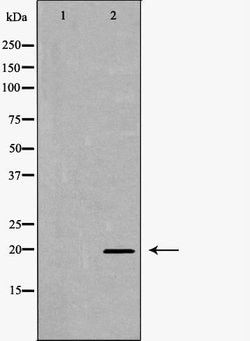

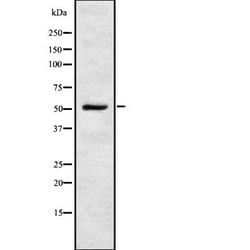
Description
- Antibody detects endogenous levels of total RAG2
- RAG2 (V(D)J recombination-activating protein 2) is a core component of the RAG complex - a multiprotein complex that mediates the DNA cleavage phase during V(D)J recombination
- V(D)J recombination assembles a diverse repertoire of immunoglobulin and T-cell receptor genes in developing B and T-lymphocytes through rearrangement of different V (variable), in some cases D (diversity) and J (joining) gene segments
- DNA cleavage by the RAG complex occurs in 2 steps: 1) first a nick is introduced in the top strand immediately upstream of the heptamer, generating a 3'-hydroxyl group that can attack the phosphodiester bond on the opposite strand in a direct transesterification reaction, thereby creating 4 DNA ends
- 2) hairpin coding ends and 2 blunt, 5'-phosphorylated ends are created
- The chromatin structure plays an essential rold in the V(D)J recombination reactions and the presence of histone H3 trimethylated at 'Lys-4' (H3K4me3) stimulates both the nicking and hair pinning expressed on individual B-lymphocytes
- The introduction of DNA breaks by the RAG complex on one immunoglobulin allele induces ATM-dependent repositioning of the other allele to pericentromeric heterochromatin
- This prevents accessibility to the RAG complex and recombination of the second allele
- In the RAG complex, RAG2 is not the catalytic component but is required for all known catalytic activities mediated by RAG1
- Mutations affecting the gene can results in combined cellular and humoral immune defects with granulomas, severe combined immunodeficiency autosomal recessive T-cell-negative/B-cell-negative/NK-cell-positive, and Omenn syndrome.