PIPA5102939
H3F3A Polyclonal Antibody, Invitrogen™
Manufacturer: Thermo Scientific
Select a Size
| Pack Size | SKU | Availability | Price |
|---|---|---|---|
| Each of 1 | PIPA5102939-Each-of-1 | In Stock | ₹ 45,345.50 |
PIPA5102939 - Each of 1
In Stock
Quantity
1
Base Price: ₹ 45,345.50
GST (18%): ₹ 8,162.19
Total Price: ₹ 53,507.69
Antigen
H3F3A
Classification
Polyclonal
Conjugate
Unconjugated
Gene
H3-3A
Gene Alias
H3 histone, family 3A; H3.3A; H3.3B; H3/a; H3-3A; H3-3B; H3F3; H3F3A; H3F3B; Histone 3; Histone H3.3; PP781
Host Species
Rabbit
Purification Method
Affinity chromatography
Regulatory Status
RUO
Gene ID (Entrez)
3020
Content And Storage
-20°C
Form
Liquid
Applications
Immunocytochemistry, Immunohistochemistry (Paraffin), Western Blot
Concentration
1 mg/mL
Formulation
PBS with 50% glycerol and 0.02% sodium azide; pH 7.4
Gene Accession No.
P84243
Gene Symbols
H3-3A
Immunogen
A synthesized peptide derived from human H3F3A, H3F3B(Accession P84243), corresponding to amino acid residues T7-K57.
Quantity
100 μL
Primary or Secondary
Primary
Target Species
Human, Mouse
Product Type
Antibody
Isotype
IgG
Related Products


Description
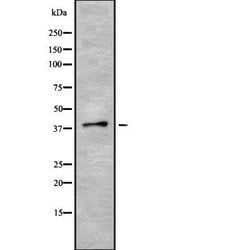
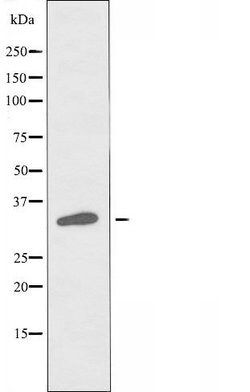
- Antibody detects endogenous levels of total H3F3A
- Histone H3 is one of the DNA-binding proteins found in the chromatin of all eukaryotic cells
- H3 along with four core histone proteins binds to DNA forming the structure of the nucleosome
- Histones play a central role in transcription regulation, DNA repair, DNA replication and chromosomal stability
- Post translationally, histones are modified in a variety of ways to either directly change the chromatin structure or allow for the binding of specific transcription factors
- The N-terminal tail of histone H3 protrudes from the globular nucleosome core and can undergo several different types of post-translational modification that influence cellular processes
- These modifications include the covalent attachment of methyl or acetyl groups to lysine and arginine amino acids and the phosphorylation of serine or threonine.