CD97 Polyclonal Antibody, Invitrogen™
Manufacturer: Thermo Scientific
Select a Size
| Pack Size | SKU | Availability | Price |
|---|---|---|---|
| Each of 1 | PIPA5103014-Each-of-1 | In Stock | ₹ 46,502.50 |
PIPA5103014 - Each of 1
In Stock
Quantity
1
Base Price: ₹ 46,502.50
GST (18%): ₹ 8,370.45
Total Price: ₹ 54,872.95
Antigen
CD97
Classification
Polyclonal
Conjugate
Unconjugated
Gene
ADGRE5
Gene Alias
AA409984; Adgre5; adhesion G protein-coupled receptor E5; Cd97; CD97 antigen; CD97 antigen subunit alpha; CD97 antigen subunit beta; CD97 molecule; EGF-TM7 receptor; leukocyte antigen CD97; seven transmembrane helix receptor; seven-span transmembrane protein; seven-transmembrane, heterodimeric receptor associated with inflammation; TM7LN1
Host Species
Rabbit
Purification Method
Affinity chromatography
Regulatory Status
RUO
Gene ID (Entrez)
976
Content And Storage
-20°C
Form
Liquid
Applications
Western Blot
Concentration
1 mg/mL
Formulation
PBS with 50% glycerol and 0.02% sodium azide; pH 7.4
Gene Accession No.
P48960
Gene Symbols
ADGRE5, CD97
Immunogen
A synthesized peptide derived from human CD97(Accession P48960), corresponding to amino acid residues S451-D501.
Quantity
100 μL
Primary or Secondary
Primary
Target Species
Human
Product Type
Antibody
Isotype
IgG
Related Products
Description
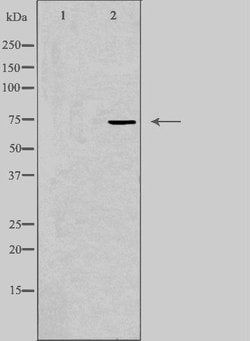
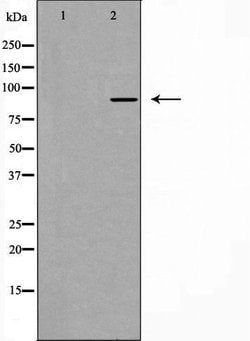
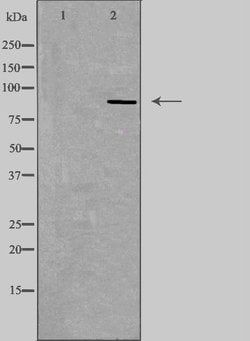
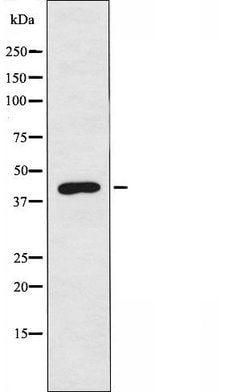
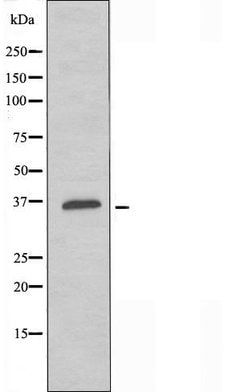
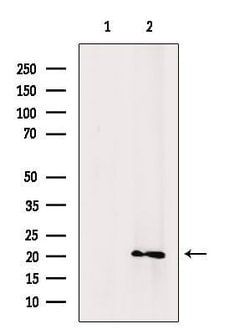
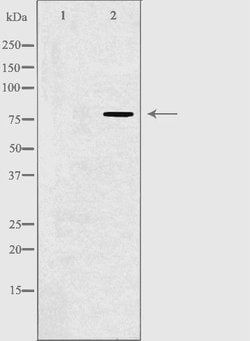
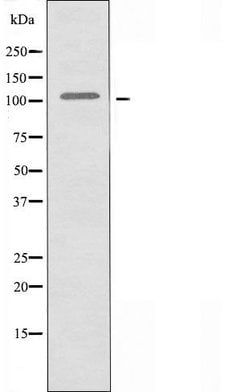
- Antibody detects endogenous levels of total CD97
- CD97 is a G-protein-coupled seven-span transmembrane adhesive receptor that is constitutively expressed on granulocytes and monocytes and rapidly upregulated on T and B cells upon activation
- CD97 is produced in alternatively spliced forms and its cellular ligand is CD55 (DAF), which protects various cell types from complement-mediated damage
- Interaction of CD97 on leukocytes and CD55 on vessel cells probably facilitate leukocyte activation and migration into the tissues, similarly, CD97 seems to play a role in tumour migration and invasiveness
- CD97 is involved in T cell regulation and peripheral granulocyte homeostasis.