GIT1 Polyclonal Antibody, Invitrogen™
Manufacturer: Thermo Scientific
Select a Size
| Pack Size | SKU | Availability | Price |
|---|---|---|---|
| Each of 1 | PIPA5103200-Each-of-1 | In Stock | ₹ 46,502.50 |
PIPA5103200 - Each of 1
In Stock
Quantity
1
Base Price: ₹ 46,502.50
GST (18%): ₹ 8,370.45
Total Price: ₹ 54,872.95
Antigen
GIT1
Classification
Polyclonal
Conjugate
Unconjugated
Gene
GIT1
Gene Alias
ARF GAP GIT1; ARF GTPase-activating protein GIT1; CAT1; CAT-1; cool-associated and tyrosine-phosphorylated protein 1; G protein-coupled receptor kinase interacting ArfGAP 1; G protein-coupled receptor kinase interactor 1; G protein-coupled receptor kinase-associated ADP ribosylation factor GTPase-activating protein; G protein-coupled receptor kinase-associated ADP ribosylation factor GTPase-activating protein (GIT1); G protein-coupled receptor kinase-interactor 1; GIT ArfGAP 1; Git1; GRK-interacting protein 1; I79_013368; p95Cat
Host Species
Rabbit
Purification Method
Affinity chromatography
Regulatory Status
RUO
Gene ID (Entrez)
216963, 28964, 83709
Content And Storage
-20°C
Form
Liquid
Applications
Immunocytochemistry, Immunohistochemistry (Paraffin), Western Blot
Concentration
1 mg/mL
Formulation
PBS with 50% glycerol and 0.02% sodium azide; pH 7.4
Gene Accession No.
Q68FF6, Q9Y2X7, Q9Z272
Gene Symbols
GIT1
Immunogen
A synthesized peptide derived from human GIT1(Accession Q9Y2X7), corresponding to amino acid residues P569-G619.
Quantity
100 μL
Primary or Secondary
Primary
Target Species
Human, Mouse, Rat
Product Type
Antibody
Isotype
IgG
Related Products
Description
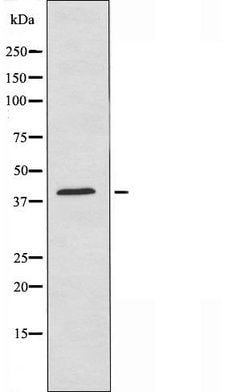
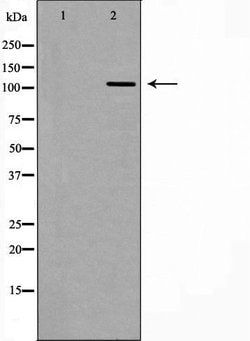
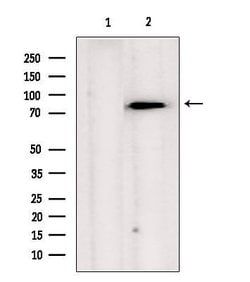
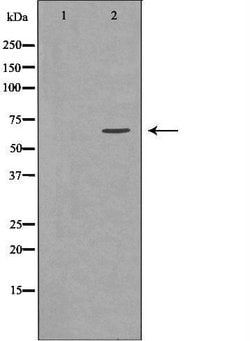
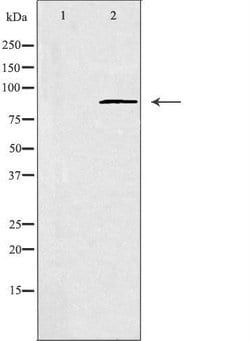
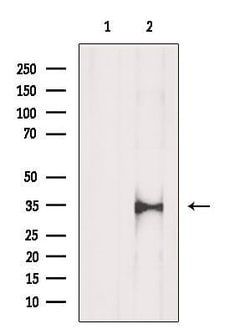
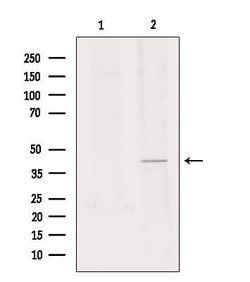
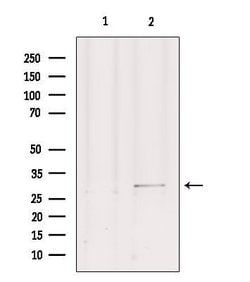
- Antibody detects endogenous levels of total GIT1
- GIT1 is a GTPase-activating protein for the ADP ribosylation factor family
- It may serve as a scaffold to bring together molecules to form signaling modules controlling vesicle trafficking, adhesion and cytoskeletal organization
- It increases the speed of cell migration, as well as the size and rate of formation of protrusions, possibly by targeting PAK1 to adhesions and the leading edge of lamellipodia.