MAK Polyclonal Antibody, Invitrogen™
Manufacturer: Thermo Scientific
Select a Size
| Pack Size | SKU | Availability | Price |
|---|---|---|---|
| Each of 1 | PIPA5103212-Each-of-1 | In Stock | ₹ 46,502.50 |
PIPA5103212 - Each of 1
In Stock
Quantity
1
Base Price: ₹ 46,502.50
GST (18%): ₹ 8,370.45
Total Price: ₹ 54,872.95
Antigen
MAK
Classification
Polyclonal
Conjugate
Unconjugated
Gene
MAK
Gene Alias
A930010O05Rik; dJ417M14.2; MAK; male germ cell associated kinase; male germ cell-associated kinase; male germ cell-associated kinase retinal-enriched isoform; protein kinase RCK; Rck; RP62; serine/threonine protein kinase MAK; serine/threonine-protein kinase MAK; testicular secretory protein Li 28; Unknown (protein for MGC:134523)
Host Species
Rabbit
Purification Method
Affinity chromatography
Regulatory Status
RUO
Gene ID (Entrez)
17152, 25677, 4117
Content And Storage
-20°C
Form
Liquid
Applications
Immunocytochemistry, Western Blot
Concentration
1 mg/mL
Formulation
PBS with 50% glycerol and 0.02% sodium azide; pH 7.4
Gene Accession No.
P20793, P20794, Q04859
Gene Symbols
MAK
Immunogen
A synthesized peptide derived from human MAK(Accession P20794), corresponding to amino acid residues L132-D182.
Quantity
100 μL
Primary or Secondary
Primary
Target Species
Human, Mouse, Rat
Product Type
Antibody
Isotype
IgG
Related Products
Description
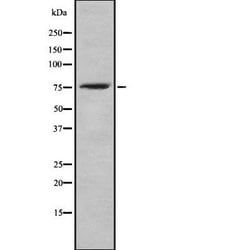
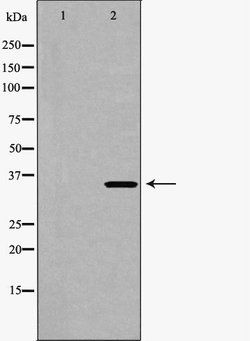
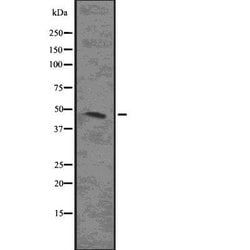
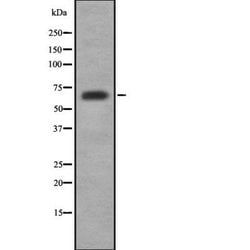
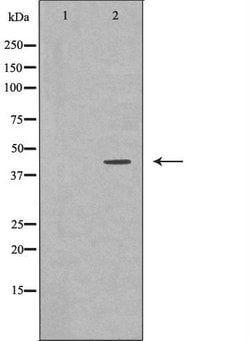
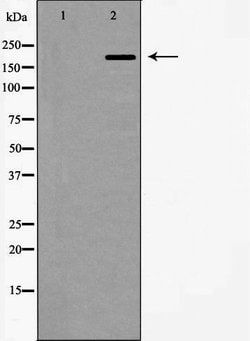
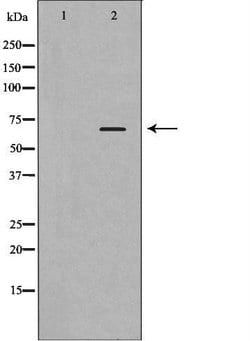
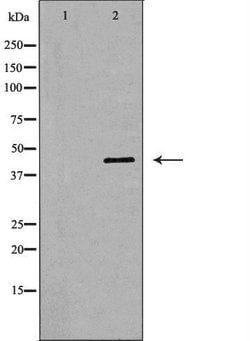
- Antibody detects endogenous levels of total MAK
- The product of this gene is a serine/threonine protein kinase related to kinases involved in cell cycle regulation
- It is expressed almost exclusively in the testis, primarily in germ cells
- Studies of the mouse and rat homologs have localized the kinase to the chromosomes during meiosis in spermatogenesis, specifically to the synaptonemal complex that exists while homologous chromosomes are paired
- There is, however, a study of the mouse homolog that has identified high levels of expression in developing sensory epithelia so its function may be more generalized.