TSHZ2 Polyclonal Antibody, Invitrogen™
Manufacturer: Thermo Scientific
Select a Size
| Pack Size | SKU | Availability | Price |
|---|---|---|---|
| Each of 1 | PIPA5103361-Each-of-1 | In Stock | ₹ 45,345.50 |
PIPA5103361 - Each of 1
In Stock
Quantity
1
Base Price: ₹ 45,345.50
GST (18%): ₹ 8,162.19
Total Price: ₹ 53,507.69
Antigen
TSHZ2
Classification
Polyclonal
Conjugate
Unconjugated
Gene
TSHZ2
Gene Alias
2900073F20Rik; B830045G17; C20orf17; cell growth-inhibiting protein 7; Kiaa4248; mKIAA4248; Mtsh2; Ovarian cancer-related protein 10-2; OVC10-2; Sdccag33l; SDCCAG33-like protein; serologically defined colon cancer antigen 33 like; teashirt 2; teashirt family zinc finger 2; teashirt homolog 2; teashirt homolog 2-like; teashirt zinc finger family member 2; teashirt zinc finger homeobox 2; teashirt2; TSH2; TSHZ2; ZABC2; Zfp218; Zinc finger protein 218; ZNF218
Host Species
Rabbit
Purification Method
Affinity chromatography
Regulatory Status
RUO
Gene ID (Entrez)
128553, 228911
Content And Storage
-20°C
Form
Liquid
Applications
Western Blot
Concentration
1 mg/mL
Formulation
PBS with 50% glycerol and 0.02% sodium azide; pH 7.4
Gene Accession No.
Q68FE9, Q9NRE2
Gene Symbols
TSHZ2
Immunogen
A synthesized peptide derived from human TSHZ2(Accession Q9NRE2), corresponding to amino acid residues D225-L275.
Quantity
100 μL
Primary or Secondary
Primary
Target Species
Human, Mouse
Product Type
Antibody
Isotype
IgG
Related Products
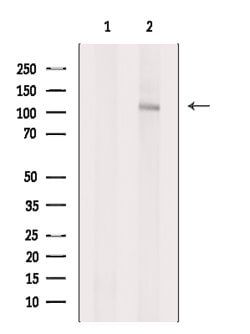
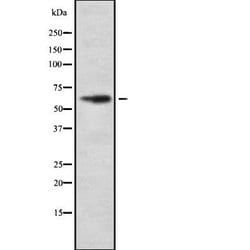
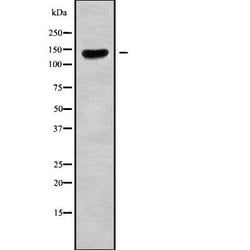
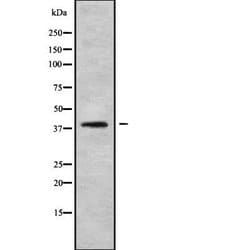
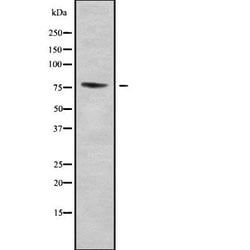
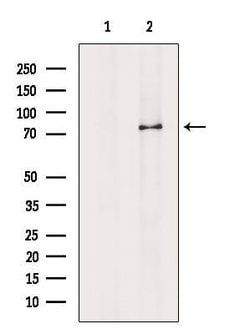
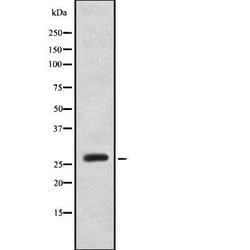
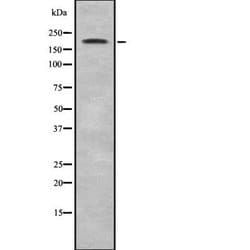
Description
- Antibody detects endogenous levels of total TSH2
- The Teashirt zinc finger homeobox (TSHZ) family comprise a family of evolutionarily conserved transcription factors that, in Drosophila, are active in specific body parts for patterning, but whose function in vertebrates is less clear
- In mice, the known three TSHZ proteins are expressed in distinct patterns in the developing and adult brain, suggesting that they play a role in the establishment of regional identity and specification of cell types within the brain
- Recent experiments have shown that the expression of TSHZ2 is frequently downregulated in most breast and prostate cancers and its promoter was unmethylated in virtually all cases, suggesting this family of proteins may also be involved in carcinogenesis.