PIPA5103396
CDH26 Polyclonal Antibody, Invitrogen™
Manufacturer: Thermo Scientific
Select a Size
| Pack Size | SKU | Availability | Price |
|---|---|---|---|
| Each of 1 | PIPA5103396-Each-of-1 | In Stock | ₹ 45,345.50 |
PIPA5103396 - Each of 1
In Stock
Quantity
1
Base Price: ₹ 45,345.50
GST (18%): ₹ 8,162.19
Total Price: ₹ 53,507.69
Antigen
CDH26
Classification
Polyclonal
Conjugate
Unconjugated
Gene
CDH26
Gene Alias
Cadherin; cadherin 26; cadherin-like 26; cadherin-like protein 26; Cadherin-like protein VR20; CDH26; Gm1010; VR20
Host Species
Rabbit
Purification Method
Affinity chromatography
Regulatory Status
RUO
Gene ID (Entrez)
311693, 381409, 60437
Content And Storage
-20°C
Form
Liquid
Applications
Immunocytochemistry, Western Blot
Concentration
1 mg/mL
Formulation
PBS with 50% glycerol and 0.02% sodium azide; pH 7.4
Gene Accession No.
P59862, Q8IXH8
Gene Symbols
CDH26
Immunogen
A synthesized peptide derived from human CDH26(Accession Q8IXH8), corresponding to amino acid residues L15-E65.
Quantity
100 μL
Primary or Secondary
Primary
Target Species
Human, Mouse, Rat
Product Type
Antibody
Isotype
IgG
Related Products
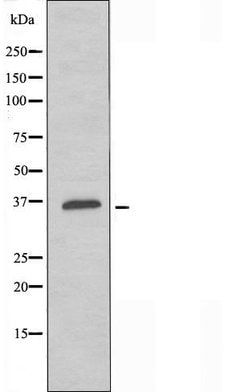
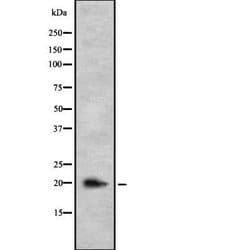
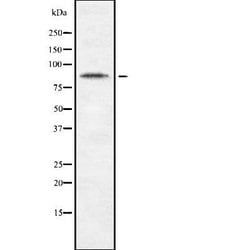
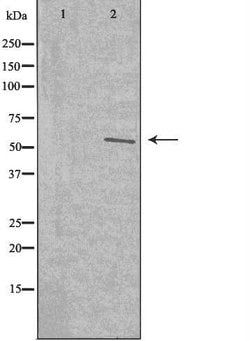
Description
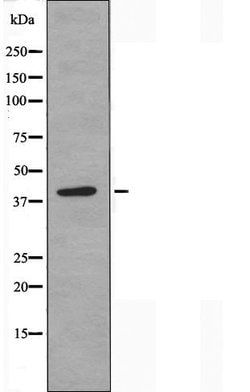
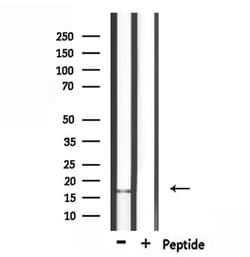
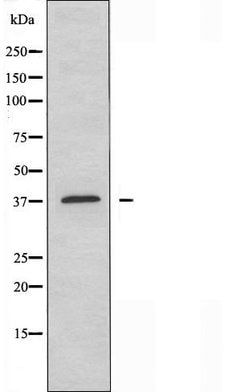
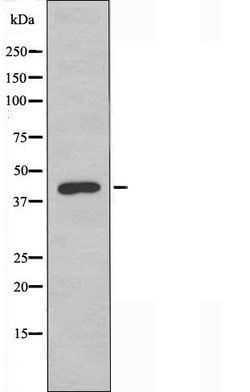
- Antibody detects endogenous levels of total CDH26
- Cadherins are a family of adhesion molecules that mediate Ca2+-dependent cell-cell adhesion in all solid tissues and modulate a wide variety of processes, including cell polarization and migration
- Cadherin domains occur as repeats in the extracellular region and are thought to contribute to the sorting of heterogeneous cell types and the maintenance of orderly structures such as epithelium
- This gene encodes a cadherin domain-containing protein whose specific function has not yet been determined
- Alternative splicing occurs at this locus and two transcript variants, encoding distinct proteins, have been identified.