PIPA5103464
MAGEF1 Polyclonal Antibody, Invitrogen™
Manufacturer: Thermo Scientific
Select a Size
| Pack Size | SKU | Availability | Price |
|---|---|---|---|
| Each of 1 | PIPA5103464-Each-of-1 | In Stock | ₹ 46,502.50 |
PIPA5103464 - Each of 1
In Stock
Quantity
1
Base Price: ₹ 46,502.50
GST (18%): ₹ 8,370.45
Total Price: ₹ 54,872.95
Antigen
MAGEF1
Classification
Polyclonal
Conjugate
Unconjugated
Gene
MAGEF1
Gene Alias
6430590I03Rik; MAGE family member F1; MAGEF1; MAGE-F1; MAGE-F1 antigen; MAGF1; melanoma antigen family F, 1; melanoma antigen family F1; melanoma-associated antigen F1; MGC19617
Host Species
Rabbit
Purification Method
Affinity chromatography
Regulatory Status
RUO
Gene ID (Entrez)
64110, 76222
Content And Storage
-20°C
Form
Liquid
Applications
Immunocytochemistry, Immunohistochemistry (Paraffin), Western Blot
Concentration
1 mg/mL
Formulation
PBS with 50% glycerol and 0.02% sodium azide; pH 7.4
Gene Accession No.
Q9HAY2
Gene Symbols
MAGEF1
Immunogen
A synthesized peptide derived from human MAGEF1(Accession Q9HAY2), corresponding to amino acid residues Q221-V271.
Quantity
100 μL
Primary or Secondary
Primary
Target Species
Human, Mouse
Product Type
Antibody
Isotype
IgG
Related Products

Description
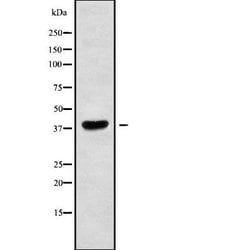
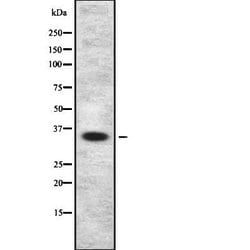
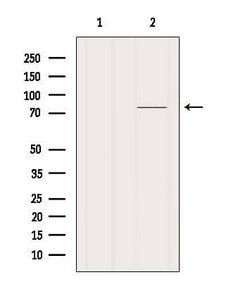
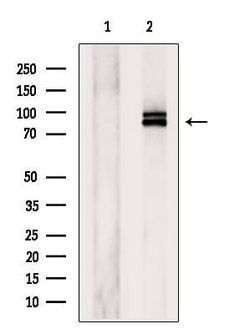
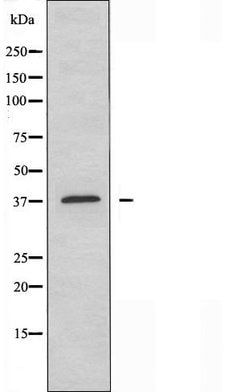
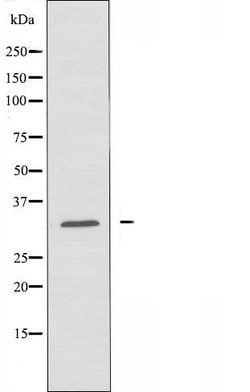
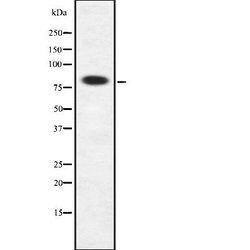
- Antibody detects endogenous levels of total MAGF1
- Melanoma-associated antigen (MAGE) are completely silent in normal tissues, with the exception of male germ cells, and, for some of them, placenta
- These antigens ought to be strictly tumor specific, expressed in tumor cells of various histological types
- Because of their specific expression on tumor cells, these antigens are of particular interest for antitumor immunotherapy
- Genes of the MAGE family direct the expression of tumor antigens that are recognized on a human melanoma by autologous cytolytic T lymphocytes
- Though the function of MAGE is unknown, may play a role in embryonal development and tumor transformation or aspects of tumor progression.