HUS1B Polyclonal Antibody, Invitrogen™
Manufacturer: Thermo Scientific
Select a Size
| Pack Size | SKU | Availability | Price |
|---|---|---|---|
| Each of 1 | PIPA5103493-Each-of-1 | In Stock | ₹ 46,502.50 |
PIPA5103493 - Each of 1
In Stock
Quantity
1
Base Price: ₹ 46,502.50
GST (18%): ₹ 8,370.45
Total Price: ₹ 54,872.95
Antigen
HUS1B
Classification
Polyclonal
Conjugate
Unconjugated
Gene
Hus1b
Gene Alias
Checkpoint protein HUS1B; hHUS1B; HUS1 checkpoint clamp component B; HUS1 checkpoint homolog b; HUS1 checkpoint homolog b (S. pombe); Hus1 homolog b (S. pombe); Hus1b; MGC126746; MGC126748; mHUS1B; RP11-532F6.1
Host Species
Rabbit
Purification Method
Affinity chromatography
Regulatory Status
RUO
Gene ID (Entrez)
135458, 691382
Content And Storage
-20°C
Form
Liquid
Applications
Immunocytochemistry, Immunohistochemistry (Paraffin), Western Blot
Concentration
1 mg/mL
Formulation
PBS with 50% glycerol and 0.02% sodium azide; pH 7.4
Gene Accession No.
Q8NHY5
Gene Symbols
Hus1b
Immunogen
A synthesized peptide derived from human HUS1B(Accession Q8NHY5), corresponding to amino acid residues F66-V116.
Quantity
100 μL
Primary or Secondary
Primary
Target Species
Human, Rat
Product Type
Antibody
Isotype
IgG
Related Products

Description
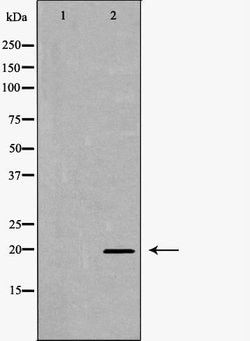
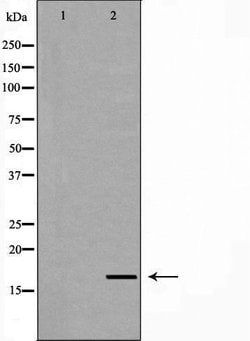
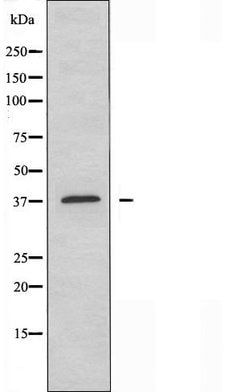
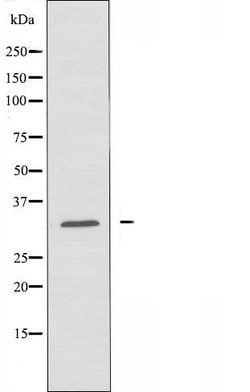
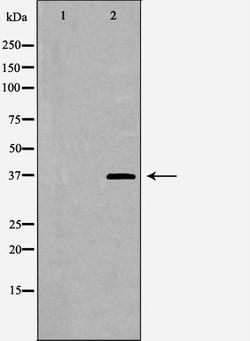
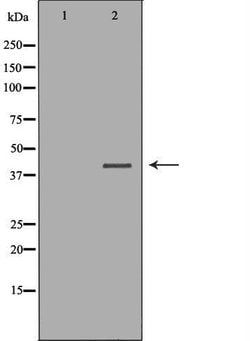
- Antibody detects endogenous levels of total HUS1B
- HUS1Bis most closely related to HUS1, a component of a cell cycle checkpoint protein complex involved in cell cycle arrest in response to DNA damage
- HUS1B can interact with the check point protein RAD1 but not with RAD9
- Overexpression of HUS1B has been shown to induce cell death, which suggests a related but distinct role of this protein, as compared to the HUS1
- The protein encoded by this gene is most closely related to HUS1, a component of a cell cycle checkpoint protein complex involved in cell cycle arrest in response to DNA damage
- This protein can interact with the check point protein RAD1 but not with RAD9
- Overexpression of this protein has been shown to induce cell death, which suggests a related but distinct role of this protein, as compared to the HUS1.