RPS21 Polyclonal Antibody, Invitrogen™
Manufacturer: Thermo Scientific
Select a Size
| Pack Size | SKU | Availability | Price |
|---|---|---|---|
| Each of 1 | PIPA5103534-Each-of-1 | In Stock | ₹ 46,502.50 |
PIPA5103534 - Each of 1
In Stock
Quantity
1
Base Price: ₹ 46,502.50
GST (18%): ₹ 8,370.45
Total Price: ₹ 54,872.95
Antigen
RPS21
Classification
Polyclonal
Conjugate
Unconjugated
Gene
RPS21
Gene Alias
1810049N11Rik; 2410030A14Rik; 40S ribosomal protein S21; 8.2 kDa differentiation factor; HLDF; human leukemia differentiation factor; LOC615178 protein; ribosomal protein S21; rps21; S21; Small ribosomal subunit protein eS21; zgc:56642; zgc:86816
Host Species
Rabbit
Purification Method
Affinity chromatography
Regulatory Status
RUO
Gene ID (Entrez)
6227, 66481, 81775
Content And Storage
-20°C
Form
Liquid
Applications
Immunocytochemistry, Western Blot
Concentration
1 mg/mL
Formulation
PBS with 50% glycerol and 0.02% sodium azide; pH 7.4
Gene Accession No.
P05765, P63220, Q9CQR2
Gene Symbols
RPS21
Immunogen
A synthesized peptide derived from human RPS21(Accession P63220), corresponding to amino acid residues V39-F83.
Quantity
100 μL
Primary or Secondary
Primary
Target Species
Human, Mouse, Rat
Product Type
Antibody
Isotype
IgG
Related Products
Description
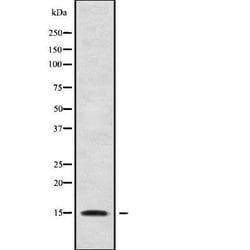
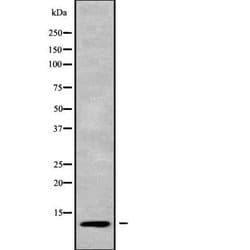
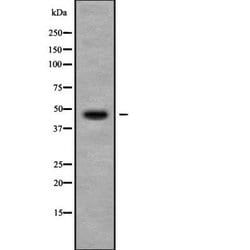
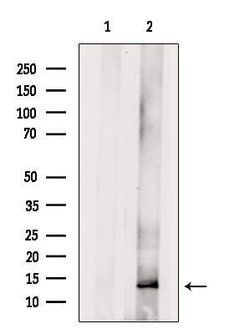
- Antibody detects endogenous levels of total RPS21
- Differentiated embryo-chondrocyte expressed gene 1 (DEC1) is an important protein involved in embryonic cell differentiation, proliferation, and apoptosis
- It has also recently been shown to be regulated by hypoxia
- The loss of DEC1 expression may be an early event in the development of lung cancer, while DEC1 may be up-regulated by hypoxia in other cancers and in more extreme hypoxia it may have a role in cell death.