APOBEC3H Polyclonal Antibody, Invitrogen™
Manufacturer: Thermo Scientific
Select a Size
| Pack Size | SKU | Availability | Price |
|---|---|---|---|
| Each of 1 | PIPA5103787-Each-of-1 | In Stock | ₹ 45,345.50 |
PIPA5103787 - Each of 1
In Stock
Quantity
1
Base Price: ₹ 45,345.50
GST (18%): ₹ 8,162.19
Total Price: ₹ 53,507.69
Antigen
APOBEC3H
Classification
Polyclonal
Conjugate
Unconjugated
Gene
APOBEC3H
Gene Alias
A3H; APOBEC3H; APOBEC-related protein 10; apolipoprotein B mRNA editing enzyme catalytic polypeptide like 3H; apolipoprotein B mRNA editing enzyme catalytic subunit 3H; apolipoprotein B mRNA editing enzyme, catalytic polypeptide-like 3H; Apolipoprotein B mRNA-editing enzyme catalytic polypeptide-like 3H; ARP10; ARP-10; DNA dC->dU-editing enzyme APOBEC-3H
Host Species
Rabbit
Purification Method
Affinity chromatography
Regulatory Status
RUO
Gene ID (Entrez)
164668
Content And Storage
-20°C
Form
Liquid
Applications
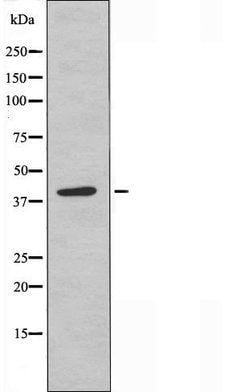
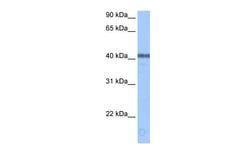
Western Blot
Concentration
1 mg/mL
Formulation
PBS with 50% glycerol and 0.02% sodium azide; pH 7.4
Gene Accession No.
Q6NTF7
Gene Symbols
APOBEC3H
Immunogen
A synthesized peptide derived from human APOBEC3H(Accession Q6NTF7), corresponding to amino acid residues N147-D197.
Quantity
100 μL
Primary or Secondary
Primary
Target Species
Human
Product Type
Antibody
Isotype
IgG
Related Products

Description
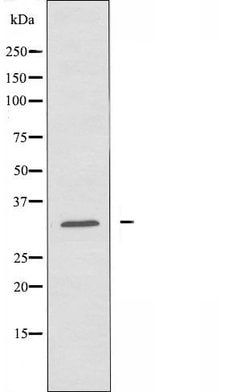
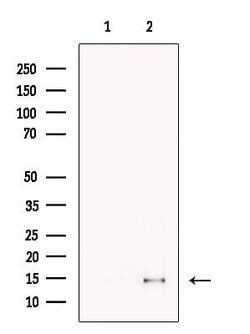
- Antibody detects endogenous levels of total APOBEC3H
- DNA deaminase (cytidine deaminase) which acts as an inhibitor of retrovirus replication and retrotransposon mobility via deaminase-dependent and -independent mechanisms
- The A3H-var/haplotype 2 exhibits antiviral activity against vif-deficient HIV-1
- After the penetration of retroviral nucleocapsids into target cells of infection and the initiation of reverse transcription, it can induce the conversion of cytosine to uracil in the minus-sense single-strand viral DNA, leading to G-to-A hypermutations in the subsequent plus-strand viral DNA
- The resultant detrimental levels of mutations in the proviral genome, along with a deamination-independent mechanism that works prior to the proviral integration, together exert efficient antiretroviral effects in infected target cells
- Selectively targets single-stranded DNA and does not deaminate double-stranded DNA or single- or double-stranded RNA
- Exhibits antiviral activity also against T-cell leukemia virus type 1 (HTLV-1) and may inhibit the mobility of LTR and non-LTR retrotransposons.