Phospho-PINK1 (Ser228) Polyclonal Antibody, Invitrogen™
Manufacturer: Thermo Scientific
Select a Size
| Pack Size | SKU | Availability | Price |
|---|---|---|---|
| Each of 1 | PIPA5105356-Each-of-1 | In Stock | ₹ 51,753.50 |
PIPA5105356 - Each of 1
In Stock
Quantity
1
Base Price: ₹ 51,753.50
GST (18%): ₹ 9,315.63
Total Price: ₹ 61,069.13
Antigen
Phospho-PINK1 (Ser228)
Classification
Polyclonal
Conjugate
Unconjugated
Gene
PINK1
Gene Alias
1190006F07Rik; AU042772; AW557854; BRPK; FLJ27236; mFLJ00387; PARK6; PINK 1; Pink1; PINK-1; protein kinase BRPK; PTEN induced putative kinase 1; PTEN-induced putative kinase protein 1; Serine/threonine-protein kinase PINK1, mitochondrial
Host Species
Rabbit
Purification Method
sequential chromatography
Regulatory Status
RUO
Gene ID (Entrez)
298575, 65018, 68943
Content And Storage
-20°C
Form
Liquid
Applications
Immunohistochemistry (Paraffin), Western Blot
Concentration
1 mg/mL
Formulation
PBS with 50% glycerol and 0.02% sodium azide; pH 7.4
Gene Accession No.
B5DFG1, Q99MQ3, Q9BXM7
Gene Symbols
PINK1
Immunogen
A synthesized peptide derived from human PINK1(Accession Q9BXM7), corresponding to amino acid residues around phosphorylated Ser228.
Quantity
100 μL
Primary or Secondary
Primary
Target Species
Human, Mouse, Rat
Product Type
Antibody
Isotype
IgG
Related Products
Description
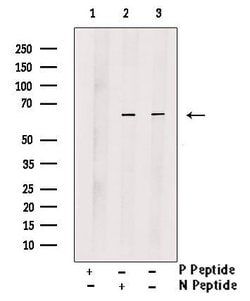
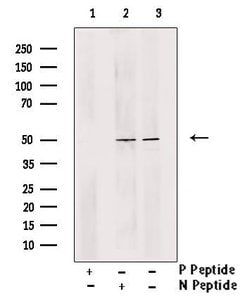
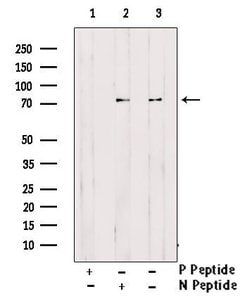
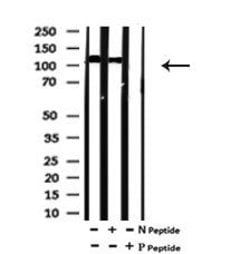
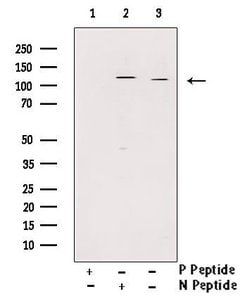
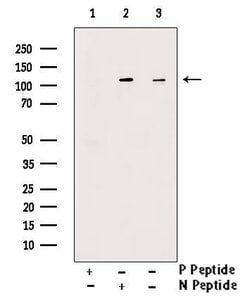
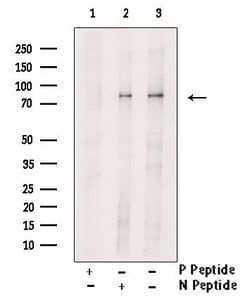
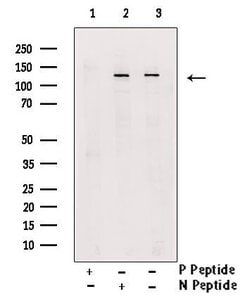
- Antibody detects endogenous levels of PINK1 only when phosphorylated at Ser228
- PINK1 (PTEN-induced putative kinase 1) protects from mitochondrial dysfunction in cells by conferring different autophosphorylation activity to mitochondrial genes
- The kinase domain of PINK1 appears to be critical in its protective effects
- Mitochondrial proteins are critical for the regulation of cellular energy and adaptation to stress
- Particularly in brain cells, mitochondrial demand is extraordinarily high, in order to accommodate aerobic and anaerobic support of high energy processes
- When mitochondrial structure and/or function is disrupted in the brain, neurodegenerative diseases like Parkinson's disease are triggered.