PIPA5106272
DACH1 Polyclonal Antibody, Invitrogen™
Manufacturer: Thermo Scientific
Select a Size
| Pack Size | SKU | Availability | Price |
|---|---|---|---|
| Each of 1 | PIPA5106272-Each-of-1 | In Stock | ₹ 46,502.50 |
PIPA5106272 - Each of 1
In Stock
Quantity
1
Base Price: ₹ 46,502.50
GST (18%): ₹ 8,370.45
Total Price: ₹ 54,872.95
Antigen
DACH1
Classification
Polyclonal
Conjugate
Unconjugated
Gene
Dach1
Gene Alias
Dac; dac homolog; DACH; Dach1; dachshund 1; dachshund 1 (Drosophila); dachshund family transcription factor 1; dachshund homolog 1; FLJ10138; OTTHUMP00000040839; RP11-512J14.1
Host Species
Rabbit
Purification Method
Affinity chromatography
Regulatory Status
RUO
Gene ID (Entrez)
13134, 1602, 306096
Content And Storage
-20°C
Form
Liquid
Applications
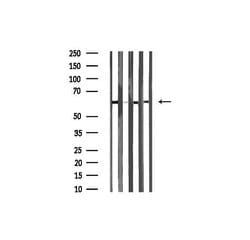
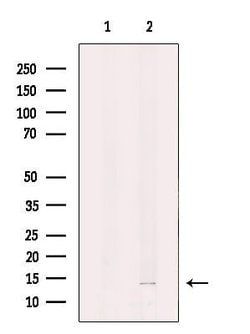
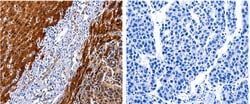
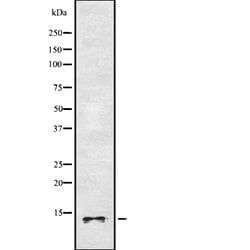
Immunohistochemistry (Paraffin), Western Blot
Concentration
1 mg/mL
Formulation
PBS with 50% glycerol and 0.02% sodium azide; pH 7.4
Gene Accession No.
Q9QYB2, Q9UI36
Gene Symbols
Dach1
Immunogen
A synthesized peptide derived from human DACH1(Accession Q9UI36), corresponding to amino acid residues S160-L210.
Quantity
100 μL
Primary or Secondary
Primary
Target Species
Human, Mouse, Rat
Product Type
Antibody
Isotype
IgG
Related Products
Description
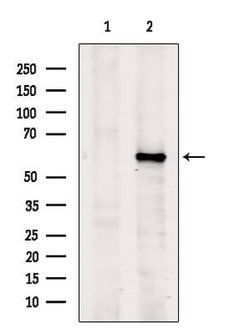
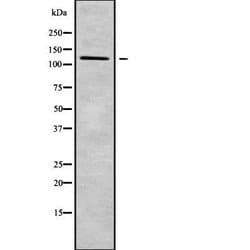
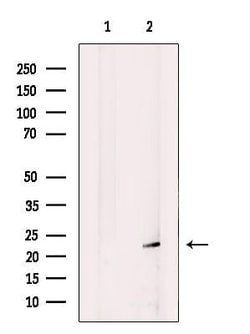
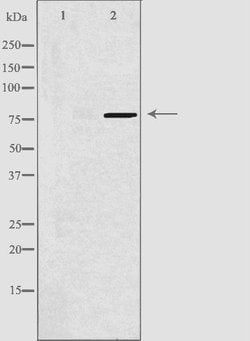
- Antibody detects endogenous levels of total DACH1
- Transcription factor that is involved in regulation of organogenesis
- Seems to be a regulator of SIX1, SIX6 and probably SIX5
- Corepression of precursor cell proliferation in myoblasts by SIX1 is switched to coactivation through recruitment of EYA3 to the SIX1-DACH1 complex
- Transcriptional activation seems also to involve association of CREBBP
- Seems to act as a corepressor of SIX6 in regulating proliferation by directly repressing cyclin-dependent kinase inhibitors, including the p27Kip1 promoter
- Inhibits TGF-beta signaling through interaction with SMAD4 and NCOR1
- Binds to chromatin DNA via its DACHbox-N domain.