PLAT Polyclonal Antibody, Invitrogen™
Manufacturer: Thermo Scientific
Select a Size
| Pack Size | SKU | Availability | Price |
|---|---|---|---|
| Each of 1 | PIPA5106932-Each-of-1 | In Stock | ₹ 46,502.50 |
PIPA5106932 - Each of 1
In Stock
Quantity
1
Base Price: ₹ 46,502.50
GST (18%): ₹ 8,370.45
Total Price: ₹ 54,872.95
Antigen
PLAT
Classification
Polyclonal
Conjugate
Unconjugated
Gene
PLAT
Gene Alias
3.4.21.68; Alteplase; AU020998; AW212668; D8Ertd2e; PATISS; plasminogen activator, tissue; plasminogen activator, tissue type; plasminogen/activator kringle; PLAT; Reteplase; serine protease; t plasminogen activator; tissue plasminogen activator; tissue-type plasminogen activator; Tissue-type plasminogen activator chain A; Tissue-type plasminogen activator chain B; TPA; t-PA; t-plasminogen activator
Host Species
Rabbit
Purification Method
Affinity chromatography
Regulatory Status
RUO
Gene ID (Entrez)
18791, 25692, 5327
Content And Storage
-20°C
Form
Liquid
Applications
Immunocytochemistry, Immunohistochemistry (Paraffin), Western Blot
Concentration
1 mg/mL
Formulation
PBS with 50% glycerol and 0.02% sodium azide; pH 7.4
Gene Accession No.
P00750, P11214, P19637
Gene Symbols
PLAT
Immunogen
A synthesized peptide derived from human PLAT(Accession P00750), corresponding to amino acid residues L446-T496.
Quantity
100 μL
Primary or Secondary
Primary
Target Species
Human, Mouse, Rat
Product Type
Antibody
Isotype
IgG
Related Products
Description
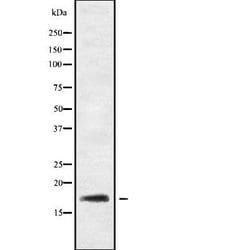
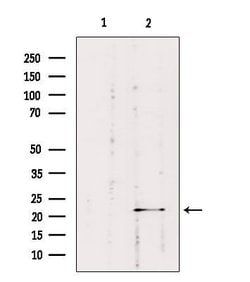
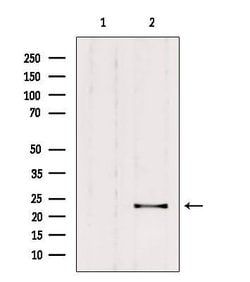
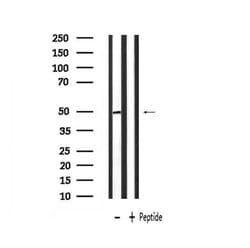
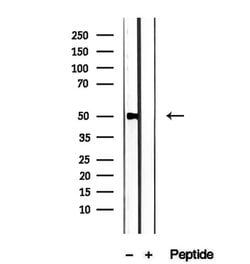
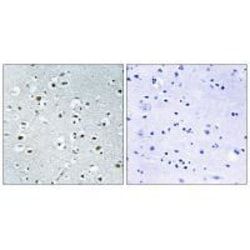
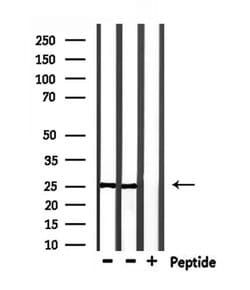
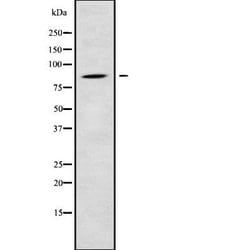
- Antibody detects endogenous levels of total PLAT
- TPA converts the abundant, but inactive, zymogen plasminogen to plasmin by hydrolyzing a single Arg-Val bond in plasminogen
- By controlling plasmin-mediated proteolysis, it plays an important role in tissue remodeling and degradation, in cell migration and many other physio pathological events
- It specifically cleaves the Arg- -Val bond in plasminogen to form plasmin, and is comprised of a heterodimer of chain A and chain B held by a disulfide bond
- TPA binds to fibrin with high affinity
- This interaction leads to an increase in the catalytic efficiency of the enzyme between 100-and 1000-fold, due to an increase in affinity for plasminogen
- Similarly, binding to heparin increases the activation of plasminogen
- Binding to laminin and fibronectin has also been demonstrated
- TPA also binds to mannose receptor and the low-density lipoprotein receptor-related protein (LRP1)
- These proteins are involved in TPA clearance
- TPA binds to annexin II and to cytokeratin 8
- As yet unidentified interactions on endothelial cells and vascular smooth muscle cells (VSMC) lead to a 100-fold stimulation of plasminogen activation
- In addition, binding to VSMC reduces TPA inhibition by PAI-1 by 30-fold.