PIPA5110977
GPR27 Polyclonal Antibody, Invitrogen™
Manufacturer: Thermo Scientific
Select a Size
| Pack Size | SKU | Availability | Price |
|---|---|---|---|
| Each of 1 | PIPA5110977-Each-of-1 | In Stock | ₹ 48,905.50 |
PIPA5110977 - Each of 1
In Stock
Quantity
1
Base Price: ₹ 48,905.50
GST (18%): ₹ 8,802.99
Total Price: ₹ 57,708.49
Antigen
GPR27
Classification
Polyclonal
Conjugate
Unconjugated
Gene
GPR27
Gene Alias
G protein-coupled receptor 27; GPR27; Probable G-protein coupled receptor 27; SREB1; Super conserved receptor expressed in brain 1
Host Species
Rabbit
Purification Method
Antigen affinity chromatography
Regulatory Status
RUO
Gene ID (Entrez)
2850
Content And Storage
Store at 4°C short term. For long term storage, store at -20°C, avoiding freeze/thaw cycles.
Form
Liquid
Applications
Immunocytochemistry, Western Blot
Concentration
0.30 mg/mL
Formulation
PBS with 40% glycerol and 0.02% sodium azide; pH 7.2
Gene Accession No.
Q9NS67
Gene Symbols
GPR27
Immunogen
Recombinant Protein corresonding to Human GPR27
Quantity
100 μL
Primary or Secondary
Primary
Target Species
Human
Product Type
Antibody
Isotype
IgG
Related Products


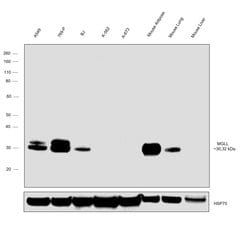
Description
- Immunogen sequence: NRELRDCFRA QFPCCQSPRT TQATHPCDLK GIGL G protein coupled receptors (GPCRs) are a large family of receptors that have a similar structure characterized by 7 transmembrane domains
- Activation of GPCRs by extracellular stimuli such as neurotransmitters, hormones, or light induces an intracellular signaling cascade mediated by heterotrimeric GTP-binding proteins, or G proteins
- The 375 amino acid GPCR GPR27 protein contains several features of the GPCR family, including 7 transmembrane domains, potential N linked glycosylation sites in the N terminal extracellular domain, and conserved cysteine residues, which may form a disulfide bridge, in the first and second extracellular loops.