XPNPEP1 Polyclonal Antibody, Invitrogen™
Manufacturer: Thermo Scientific
Select a Size
| Pack Size | SKU | Availability | Price |
|---|---|---|---|
| Each of 1 | PIPA5110997-Each-of-1 | In Stock | ₹ 48,905.50 |
PIPA5110997 - Each of 1
In Stock
Quantity
1
Base Price: ₹ 48,905.50
GST (18%): ₹ 8,802.99
Total Price: ₹ 57,708.49
Antigen
XPNPEP1
Classification
Polyclonal
Formulation
PBS with 40% glycerol and 0.02% sodium azide; pH 7.2
Gene Accession No.
Q9NQW7
Gene Symbols
Xpnpep1
Immunogen
Recombinant Protein corresonding to Human XPNPEP1
Quantity
100 μL
Primary or Secondary
Primary
Target Species
Human
Product Type
Antibody
Isotype
IgG
Applications
Immunohistochemistry, Western Blot
Conjugate
Unconjugated
Gene
Xpnpep1
Gene Alias
Aminoacylproline aminopeptidase; aminopeptidase P, cytosolic; App; APP1; cytoplasmic aminopeptidase P; cytosolic aminopeptidase P; D230045I08Rik; OTTHUMP00000020457; OTTHUMP00000058856; RGD:621274}; sAmp; soluble aminopeptidase P; Xaa-Pro aminopeptidase 1; XPNPEP; XPNPEP1; xpnpep1 {ECO:0000312; XPNPEPL; XPNPEPL1; X-Pro aminopeptidase 1; X-Pro aminopeptidase 1, soluble; X-prolyl aminopeptidase (aminopeptidase P) 1, soluble; X-prolyl aminopeptidase 1; X-prolyl aminopeptidase 1, soluble
Host Species
Rabbit
Purification Method
Antigen affinity chromatography
Regulatory Status
RUO
Gene ID (Entrez)
7511
Content And Storage
Store at 4°C short term. For long term storage, store at -20°C, avoiding freeze/thaw cycles.
Form
Liquid
Related Products
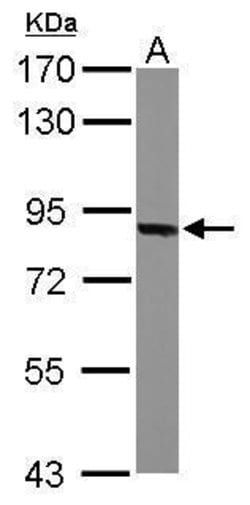


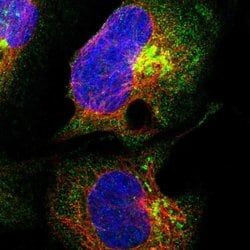
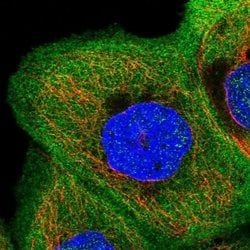
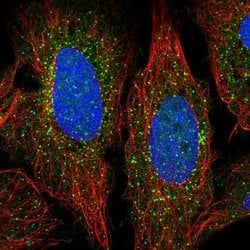

Description
- Immunogen sequence: PICIAKAVKN SAESEGMRRA HIKDAVALCE LFNWLEKEVP KGGVTEISAA DKAEEFRRQQ ADFVDLSFPT ISSTGPNGAI IHYAPVPETN This gene encodes the cytosolic form of a metalloaminopeptidase that catalyzes the cleavage of the N-terminal amino acid adjacent to a proline residue
- The gene product may play a role in degradation and maturation of tachykinins, neuropeptides, and peptide hormones
- Alternative splicing results in multiple transcript variants.