ORP5 Polyclonal Antibody, Invitrogen™
Manufacturer: Thermo Scientific
Select a Size
| Pack Size | SKU | Availability | Price |
|---|---|---|---|
| Each of 1 | PIPA5111096-Each-of-1 | In Stock | ₹ 48,905.50 |
PIPA5111096 - Each of 1
In Stock
Quantity
1
Base Price: ₹ 48,905.50
GST (18%): ₹ 8,802.99
Total Price: ₹ 57,708.49
Antigen
ORP5
Classification
Polyclonal
Formulation
PBS with 40% glycerol and 0.02% sodium azide; pH 7.2
Gene Accession No.
Q9H0X9
Gene Symbols
OSBPL5
Immunogen
Recombinant Protein corresonding to Human ORP5
Quantity
100 μL
Primary or Secondary
Primary
Target Species
Human
Product Type
Antibody
Isotype
IgG
Applications
Immunocytochemistry
Conjugate
Unconjugated
Gene
OSBPL5
Gene Alias
DKFZp586H1719; FLJ31948; FLJ42929; KIAA1534; OBPH1; ORP5; ORP-5; OSBPL5; OSBP-related protein 5; oxysterol binding protein like 5; oxysterol binding protein-like 5; oxysterol-binding protein homolog 1; oxysterol-binding protein homologue 1; oxysterol-binding protein-related protein 5
Host Species
Rabbit
Purification Method
Antigen affinity chromatography
Regulatory Status
RUO
Gene ID (Entrez)
114879
Content And Storage
Store at 4°C short term. For long term storage, store at -20°C, avoiding freeze/thaw cycles.
Form
Liquid
Related Products

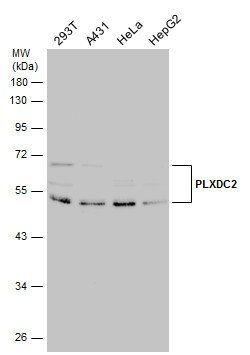
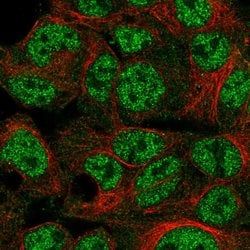
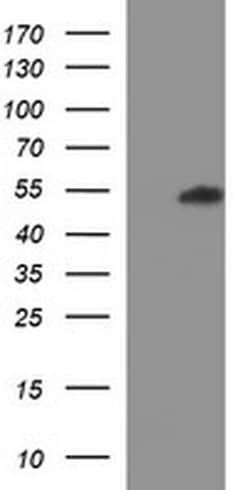
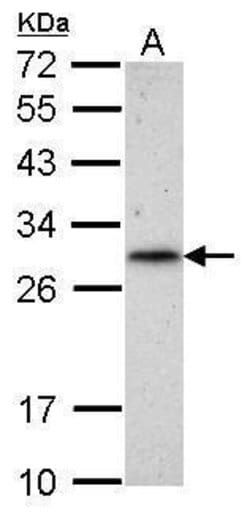

Description
- Immunogen sequence: LCGLPASATV HPDQDLFPLN GSSLENDAFS DKSERENPEE SDTETQDHSR KTESGSDQSE TPGAPVRRGT TYVEQVQEEL This gene encodes a member of the oxysterol-binding protein family, a group of intracellular lipid receptors that play a key role in the maintenance of cholesterol balance in the body
- Most members contain an N-terminal pleckstrin homology domain and a highly conserved C-terminal OSBP-like sterol-binding domain
- This gene has been shown to be imprinted, with preferential expression from the maternal allele only in placenta
- Transcript variants encoding different isoforms have been identified.