PIPA5111605
RAG2 Polyclonal Antibody, Invitrogen™
Manufacturer: Thermo Scientific
Select a Size
| Pack Size | SKU | Availability | Price |
|---|---|---|---|
| Each of 1 | PIPA5111605-Each-of-1 | In Stock | ₹ 48,905.50 |
PIPA5111605 - Each of 1
In Stock
Quantity
1
Base Price: ₹ 48,905.50
GST (18%): ₹ 8,802.99
Total Price: ₹ 57,708.49
Antigen
RAG2
Classification
Polyclonal
Conjugate
Unconjugated
Gene
RAG2
Gene Alias
RAG 2; Rag2; RAG-2; recombinase activating gene 2; recombination activating gene 2; recombination activating protein 2; V(D)J recombination-activating protein 2
Host Species
Rabbit
Purification Method
Antigen affinity chromatography
Regulatory Status
RUO
Gene ID (Entrez)
5897
Content And Storage
Store at 4°C short term. For long term storage, store at -20°C, avoiding freeze/thaw cycles.
Form
Liquid
Applications
Immunocytochemistry
Concentration
0.05 mg/mL
Formulation
PBS with 40% glycerol and 0.02% sodium azide; pH 7.2
Gene Accession No.
P55895
Gene Symbols
RAG2
Immunogen
Recombinant Protein corresonding to Human RAG2
Quantity
100 μL
Primary or Secondary
Primary
Target Species
Human
Product Type
Antibody
Isotype
IgG
Related Products
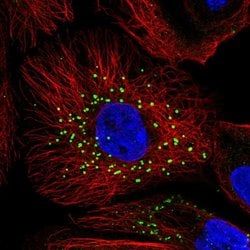

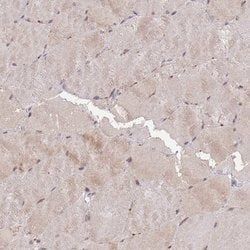
Description
- Immunogen sequence: HGGKTPNNEV SDKIYVMSIV CKNNKKVTFR CTEKDLVGDV PEARYGHSIN VVYSRGKSMG VLFGGRSYMP STHRTTEKWN SVADCLPCVF LVDF RAG2 (V(D)J recombination-activating protein 2) is a core component of the RAG complex - a multiprotein complex that mediates the DNA cleavage phase during V(D)J recombination
- V(D)J recombination assembles a diverse repertoire of immunoglobulin and T-cell receptor genes in developing B and T-lymphocytes through rearrangement of different V (variable), in some cases D (diversity) and J (joining) gene segments
- DNA cleavage by the RAG complex occurs in 2 steps: 1) first a nick is introduced in the top strand immediately upstream of the heptamer, generating a 3'-hydroxyl group that can attack the phosphodiester bond on the opposite strand in a direct transesterification reaction, thereby creating 4 DNA ends
- 2) hairpin coding ends and 2 blunt, 5'-phosphorylated ends are created
- The chromatin structure plays an essential rold in the V(D)J recombination reactions and the presence of histone H3 trimethylated at 'Lys-4' (H3K4me3) stimulates both the nicking and hair pinning expressed on individual B-lymphocytes
- The introduction of DNA breaks by the RAG complex on one immunoglobulin allele induces ATM-dependent repositioning of the other allele to pericentromeric heterochromatin
- This prevents accessibility to the RAG complex and recombination of the second allele
- In the RAG complex, RAG2 is not the catalytic component but is required for all known catalytic activities mediated by RAG1
- Mutations affecting the gene can results in combined cellular and humoral immune defects with granulomas, severe combined immunodeficiency autosomal recessive T-cell-negative/B-cell-negative/NK-cell-positive, and Omenn syndrome.