PIPA5111649
BLK Polyclonal Antibody, Invitrogen™
Manufacturer: Thermo Scientific
Select a Size
| Pack Size | SKU | Availability | Price |
|---|---|---|---|
| Each of 1 | PIPA5111649-Each-of-1 | In Stock | ₹ 48,905.50 |
PIPA5111649 - Each of 1
In Stock
Quantity
1
Base Price: ₹ 48,905.50
GST (18%): ₹ 8,802.99
Total Price: ₹ 57,708.49
Antigen
BLK
Classification
Polyclonal
Formulation
PBS with 40% glycerol and 0.02% sodium azide; pH 7.2
Gene Accession No.
P51451
Gene Symbols
BLK
Immunogen
Recombinant Protein corresonding to Human BLK
Quantity
100 μL
Primary or Secondary
Primary
Target Species
Human
Product Type
Antibody
Isotype
IgG
Applications
Immunocytochemistry
Conjugate
Unconjugated
Gene
BLK
Gene Alias
B lymphocyte kinase; B lymphoid kinase; B lymphoid tyrosine kinase; Blk; BLK nonreceptor tyrosine kinase; BLK proto-oncogene, Src family tyrosine kinase; MGC10442; MODY11; p55-Blk; tyrosine-protein kinase Blk
Host Species
Rabbit
Purification Method
Antigen affinity chromatography
Regulatory Status
RUO
Gene ID (Entrez)
640
Content And Storage
Store at 4°C short term. For long term storage, store at -20°C, avoiding freeze/thaw cycles.
Form
Liquid
Related Products
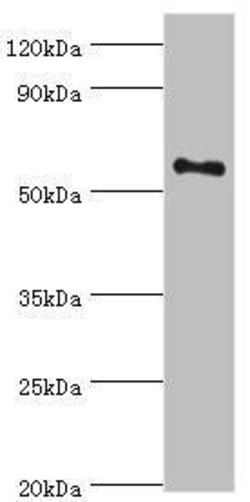


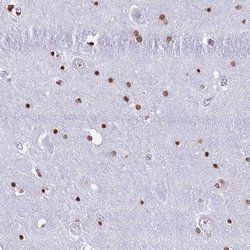
Description
- Immunogen sequence: YTAMNDRDLQ MLKGEKLQVL KGTGDWWLAR SLVTGREGYV PSNFVARVES LEMERWF B-lymphoid tyrosine kinase (BLK) is a non-receptor tyrosine kinase that belongs to the Src family of kinases
- BLK plays an important role in B-cell activation
- Protein kinases are enzymes that transfer a phosphate group from a phosphate donor, generally the g phosphate of ATP, onto an acceptor amino acid in a substrate protein
- By this basic mechanism, protein kinases mediate most of the signal transduction in eukaryotic cells, regulating cellular metabolism, transcription, cell cycle progression, cytoskeletal rearrangement and cell movement, apoptosis, and differentiation.