TRIP10 Polyclonal Antibody, Invitrogen™
Manufacturer: Thermo Scientific
Select a Size
| Pack Size | SKU | Availability | Price |
|---|---|---|---|
| Each of 1 | PIPA5111716-Each-of-1 | In Stock | ₹ 48,905.50 |
PIPA5111716 - Each of 1
In Stock
Quantity
1
Base Price: ₹ 48,905.50
GST (18%): ₹ 8,802.99
Total Price: ₹ 57,708.49
Antigen
TRIP10
Classification
Polyclonal
Formulation
PBS with 40% glycerol and 0.02% sodium azide; pH 7.2
Gene Accession No.
Q15642
Gene Symbols
Trip10
Immunogen
Recombinant Protein corresonding to Human TRIP10
Quantity
100 μL
Primary or Secondary
Primary
Target Species
Human
Product Type
Antibody
Isotype
IgG
Applications
Immunohistochemistry
Conjugate
Unconjugated
Gene
Trip10
Gene Alias
AI646975; Cdc42 interacting protein-4; cdc42-interacting protein 4; Cip4; hSTP; protein Felic; Salt tolerant protein; salt tolerator; STOT; STP; thyroid hormone receptor interactor 10; thyroid receptor-interacting protein 10; TR-interacting protein 10; TRIP10; TRIP-10
Host Species
Rabbit
Purification Method
Antigen affinity chromatography
Regulatory Status
RUO
Gene ID (Entrez)
9322
Content And Storage
Store at 4°C short term. For long term storage, store at -20°C, avoiding freeze/thaw cycles.
Form
Liquid
Related Products


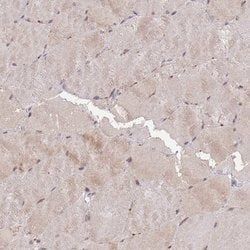
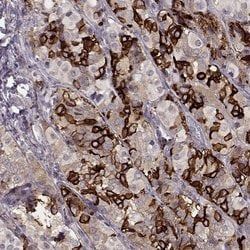
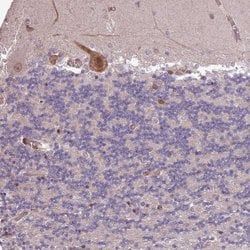
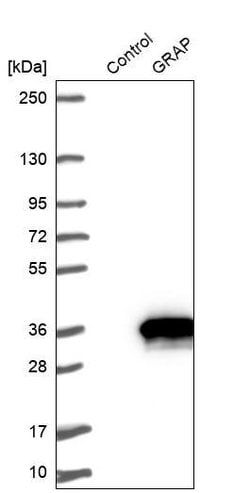
Description
- Immunogen sequence: LQRFNRDQAH FYFSQMPQIF DKLQDMDERR ATRLGAGYGL LSEAELEVVP IIA Required for translocation of GLUT4 to the plasma membrane in response to insulin signaling
- Required to coordinate membrane tubulation with reorganization of the actin cytoskeleton during endocytosis
- Binds to lipids such as phosphatidylinositol 4,5-bisphosphate and phosphatidylserine and promotes membrane invagination and the formation of tubules
- Also promotes CDC42-induced actin polymerization by recruiting WASL/N-WASP which in turn activates the Arp2/3 complex
- Actin polymerization may promote the fission of membrane tubules to form endocytic vesicles
- Required for the formation of podosomes, actin-rich adhesion structures specific to monocyte-derived cells
- May be required for the lysosomal retention of FASLG/FASL.