GLRB Polyclonal Antibody, Invitrogen™
Manufacturer: Thermo Scientific
Select a Size
| Pack Size | SKU | Availability | Price |
|---|---|---|---|
| Each of 1 | PIPA5112268-Each-of-1 | In Stock | ₹ 42,497.50 |
PIPA5112268 - Each of 1
In Stock
Quantity
1
Base Price: ₹ 42,497.50
GST (18%): ₹ 7,649.55
Total Price: ₹ 50,147.05
Antigen
GLRB
Classification
Polyclonal
Conjugate
Unconjugated
Gene
GLRB
Gene Alias
AI853901; Glrb; glycine receptor; Glycine receptor 58 kDa subunit; glycine receptor beta; glycine receptor subunit beta; glycine receptor, beta; glycine receptor, beta subunit; GlyR beta; Glyrb; HKPX2; inhibitory glycine receptor; spa; spastic
Host Species
Rabbit
Purification Method
Antigen affinity chromatography, Protein A
Regulatory Status
RUO
Gene ID (Entrez)
2743
Content And Storage
Store at 4°C short term. For long term storage, store at -20°C, avoiding freeze/thaw cycles.
Form
Liquid
Applications
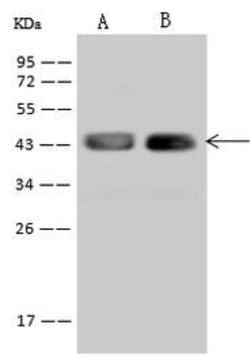
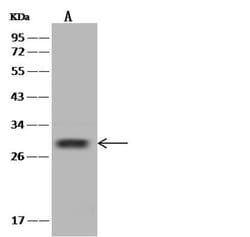
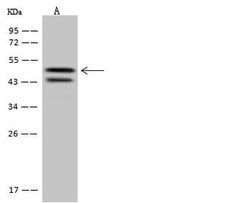
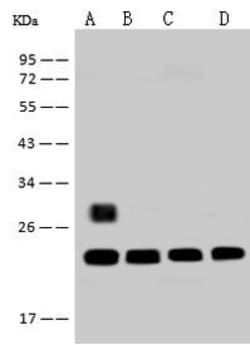
Immunohistochemistry (Paraffin), Immunoprecipitation, Western Blot
Concentration
1 mg/mL
Formulation
PBS with 0.03% ProClin 300; pH 7
Gene Accession No.
P48167
Gene Symbols
GLRB
Immunogen
E. coli-derived Human GLRB fragment
Quantity
100 μL
Primary or Secondary
Primary
Target Species
Human
Product Type
Antibody
Isotype
IgG
Related Products
Description
- In the central nervous system (CNS), glycine-mediated inhibitory neurotransmission is essential to voluntary motor control and reflex responses
- Glycine binds to glycine receptors (GlyR) in the postsynaptic neuronal membranes
- GlyR, gamma-aminobutryic acid, serotonin and acetylcholine comprise an evolutionally conserved superfamily of ligand-gated ion channels
- The pentameric subunit structure of GlyR consists of two types of glycosylated membrane proteins, alpha1 through alpha4 and beta, and an associated peripheral membrane protein, which combine to form a chloride-selective ion channel
- In humans, the composition of the pentamer changes from alpha2 subunits in the fetal CNS to alpha1 and beta subunits in the adult CNS
- Fast potentiation of GlyR by intracellular Ca2+ in the brainstem and midbrain indicate an important role for Ca2+ in modulation of glycinergic synapses.