PIPA5112366
Azurocidin Polyclonal Antibody, Invitrogen™
Manufacturer: Thermo Scientific
Select a Size
| Pack Size | SKU | Availability | Price |
|---|---|---|---|
| Each of 1 | PIPA5112366-Each-of-1 | In Stock | ₹ 43,120.50 |
PIPA5112366 - Each of 1
In Stock
Quantity
1
Base Price: ₹ 43,120.50
GST (18%): ₹ 7,761.69
Total Price: ₹ 50,882.19
Antigen
Azurocidin
Classification
Polyclonal
Conjugate
Unconjugated
Gene
AZU1
Gene Alias
AZAMP; AZU; AZU1; Azurocidin; azurocidin 1; CAP37; cationic antimicrobial protein 37; cationic antimicrobial protein CAP37; HBP; Heparin-binding protein; hHBP; HUMAZUR; NAZC; neutrophil azurocidin; pHBP
Host Species
Rabbit
Purification Method
Antigen affinity chromatography
Regulatory Status
RUO
Gene ID (Entrez)
566
Content And Storage
-20°C or -80°C if preferred
Form
Liquid
Applications
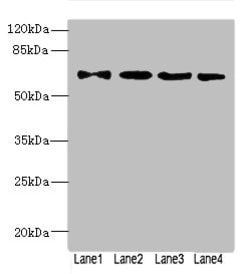
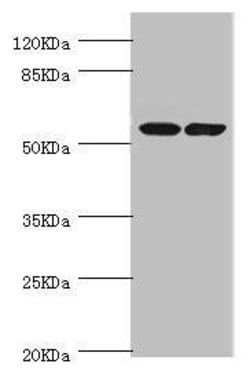
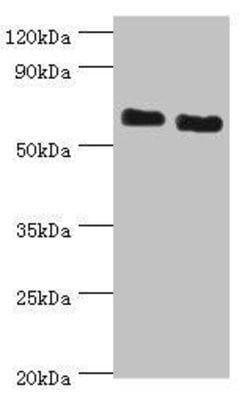
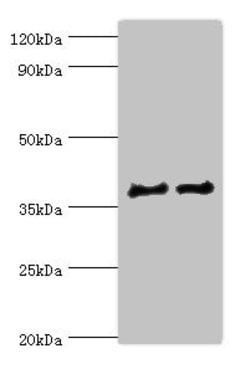
ELISA, Immunohistochemistry (Paraffin), Western Blot
Concentration
0.29 mg/mL
Formulation
PBS with 50% glycerol and 0.02% sodium azide; pH 7.3
Gene Accession No.
P20160
Gene Symbols
AZU1
Immunogen
Recombinant Human Azurocidin protein (27-251AA)
Quantity
100 μL
Primary or Secondary
Primary
Target Species
Human, Mouse
Product Type
Antibody
Isotype
IgG
Related Products
Description
- Azurocidin, also called heparin-binding protein (HBP), is an inactive homolog of serine proteinases residing in granulocytes
- Initially it was thought to have only activity against gram-negative bacteria
- Later it was also found to act against gram-positive bacteria and C
- albicans
- Azurocidin is considered a family member of polymorphonuclear leukocytes- derived antimicrobial proteins like defensins, LL-37 and lysozyme
- Azurocidin has been recognized as a player in the activation and modulation of the immune response and may act to alarm the immune system
- The cationic domain at one side of the protein is essential for its antimicrobial activity
- It is stored in azurophil granules as well as secretory granules and as a result partly released at early stage of extravasation
- Azurocidin is involved in chemotaxis and activation of monocytes, cytokine release and phagocytosis leading to more efficient bacterial clearance
- The primary targeted environment of azurocidin are cells in the bloodstream, that is the endothelial lining, and the extravascular surroundings
- The interaction of azurocidin with leucocytes is mediated via beta 2-intergrins
- High plasma levels of azurocidin might help with the identification of patients which are at risk in developing sepsis.