PIPA5112376
CD37 Polyclonal Antibody, Invitrogen™
Manufacturer: Thermo Scientific
Select a Size
| Pack Size | SKU | Availability | Price |
|---|---|---|---|
| Each of 1 | PIPA5112376-Each-of-1 | In Stock | ₹ 43,120.50 |
PIPA5112376 - Each of 1
In Stock
Quantity
1
Base Price: ₹ 43,120.50
GST (18%): ₹ 7,761.69
Total Price: ₹ 50,882.19
Antigen
CD37
Classification
Polyclonal
Conjugate
Unconjugated
Gene
CD37
Gene Alias
CD37; CD37 antigen; CD37 molecule; cell differentiation antigen 37; GP52-40; Leukocyte antigen CD37; leukocyte surface antigen CD37; tetraspanin-26; Tspan26; Tspan-26
Host Species
Rabbit
Purification Method
Protein G
Regulatory Status
RUO
Gene ID (Entrez)
12493, 951
Content And Storage
-20°C or -80°C if preferred
Form
Liquid
Applications
ELISA, Immunocytochemistry, Immunohistochemistry (Paraffin), Western Blot
Concentration
4 mg/mL
Formulation
PBS with 50% glycerol and 0.03% ProClin 300; pH 7.4
Gene Accession No.
P11049, Q61470
Gene Symbols
CD37
Immunogen
Recombinant Human Leukocyte antigen CD37 protein (109-237AA)
Quantity
100 μg
Primary or Secondary
Primary
Target Species
Human, Mouse
Product Type
Antibody
Isotype
IgG
Related Products
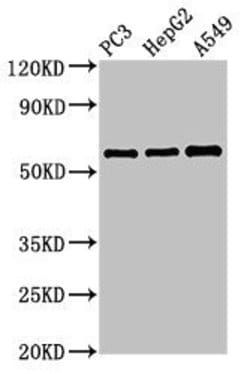
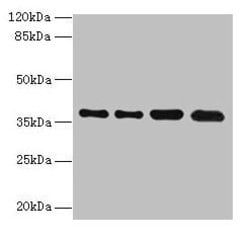
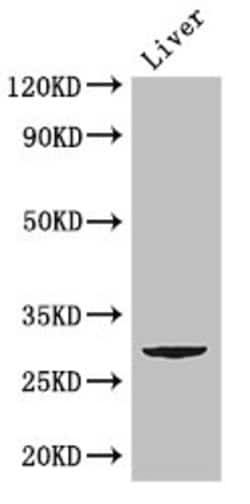
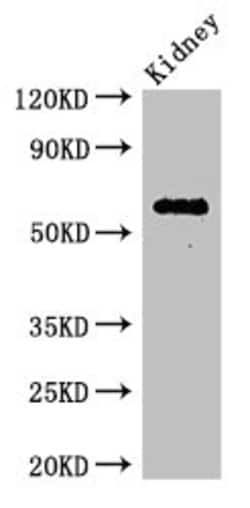
Description
- The protein encoded by this gene is a member of the transmembrane 4 superfamily, also known as the tetraspanin family
- Most of these members are cell-surface proteins that are characterized by the presence of four hydrophobic domains
- The proteins mediate signal transduction events that play a role in the regulation of cell development, activation, growth and motility
- This encoded protein is a cell surface glycoprotein that is known to complex with integrins and other transmembrane 4 superfamily proteins
- It may play a role in T-cell-B-cell interactions
- Alternate splicing results in multiple transcript variants encoding different isoforms.