SSX2 Polyclonal Antibody, Invitrogen™
Manufacturer: Thermo Scientific
Select a Size
| Pack Size | SKU | Availability | Price |
|---|---|---|---|
| Each of 1 | PIPA5112893-Each-of-1 | In Stock | ₹ 43,120.50 |
PIPA5112893 - Each of 1
In Stock
Quantity
1
Base Price: ₹ 43,120.50
GST (18%): ₹ 7,761.69
Total Price: ₹ 50,882.19
Antigen
SSX2
Classification
Polyclonal
Conjugate
Unconjugated
Gene
Ssx2
Gene Alias
cancer/testis antigen 5.2; cancer/testis antigen family 5, member 2a; CT5.2; CT5.2A; CT52; HD21; HOM-MEL-40; LOC103690782; MGC119055; MGC15364; MGC3884; Protein SSX2; putative protein SSX10; sarcoma, synovial, X-chromosome-related 2; SSX; SSX family member 2; SSX2; SSX2A; SSX2B; Synovial sarcoma, X breakpoint 2; synovial sarcoma, X breakpoint 2B; tumor antigen HOM-MEL-40
Host Species
Rabbit
Purification Method
Antigen affinity chromatography
Regulatory Status
RUO
Gene ID (Entrez)
6757
Content And Storage
-20°C or -80°C if preferred
Form
Liquid
Applications
ELISA, Immunohistochemistry (Paraffin), Western Blot
Concentration
0.32 mg/mL
Formulation
PBS with 50% glycerol and 0.02% sodium azide; pH 7.3
Gene Accession No.
Q16385
Gene Symbols
Ssx2
Immunogen
Recombinant Human Protein SSX2 protein (1-188AA)
Quantity
100 μL
Primary or Secondary
Primary
Target Species
Human
Product Type
Antibody
Isotype
IgG
Related Products
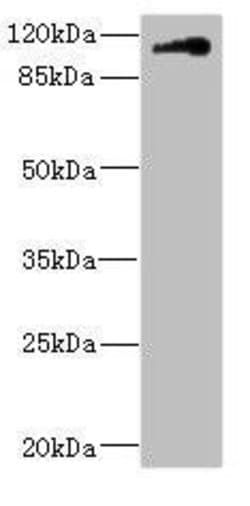
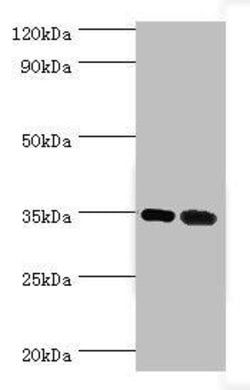
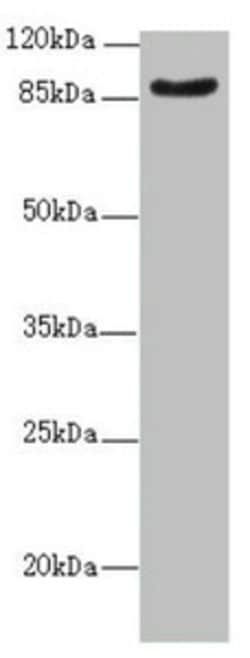
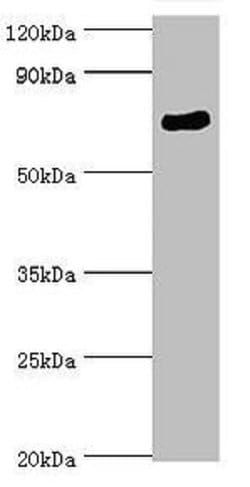
Description
- SSX2 belongs to the family of highly homologous synovial sarcoma X (SSX) breakpoint proteins
- These proteins may function as transcriptional repressors
- They are also capable of eliciting spontaneously humoral and cellular immune responses in cancer patients, and are potentially useful targets in cancer vaccine-based immunotherapy
- SSX1, SSX2 and SSX4 genes have been involved in the t(X;18) translocation characteristically found in all synovial sarcomas
- This translocation results in the fusion of the synovial sarcoma translocation gene on chromosome 18 to one of the SSX genes on chromosome X
- The encoded hybrid proteins are probably responsible for transforming activity
- Two transcript variants encoding distinct isoforms have been identified for this gene.