PIPA5112948
CERKL Polyclonal Antibody, Invitrogen™
Manufacturer: Thermo Scientific
Select a Size
| Pack Size | SKU | Availability | Price |
|---|---|---|---|
| Each of 1 | PIPA5112948-Each-of-1 | In Stock | ₹ 43,120.50 |
PIPA5112948 - Each of 1
In Stock
Quantity
1
Base Price: ₹ 43,120.50
GST (18%): ₹ 7,761.69
Total Price: ₹ 50,882.19
Antigen
CERKL
Classification
Polyclonal
Conjugate
Unconjugated
Gene
CERKL
Gene Alias
ceramide kinase like; ceramide kinase-like; ceramide kinase-like protein; CERKL; Gm1958; retinitis pigmentosa 26 (autosomal recessive); Rp26; zgc:162213
Host Species
Rabbit
Purification Method
Protein G
Regulatory Status
RUO
Gene ID (Entrez)
228094, 375298
Content And Storage
-20°C or -80°C if preferred
Form
Liquid
Applications
ELISA, Immunocytochemistry, Immunohistochemistry (Paraffin), Western Blot
Concentration
3.5 mg/mL
Formulation
PBS with 50% glycerol and 0.03% ProClin 300; pH 7.4
Gene Accession No.
Q49MI3
Gene Symbols
CERKL
Immunogen
Recombinant Human Ceramide kinase-like protein (1-558AA)
Quantity
100 μg
Primary or Secondary
Primary
Target Species
Human, Mouse
Product Type
Antibody
Isotype
IgG
Related Products
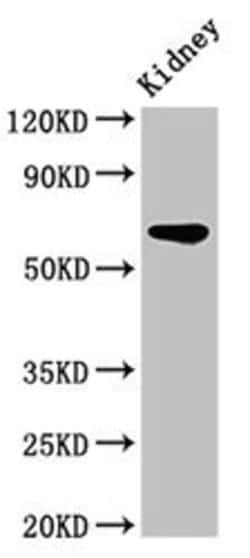
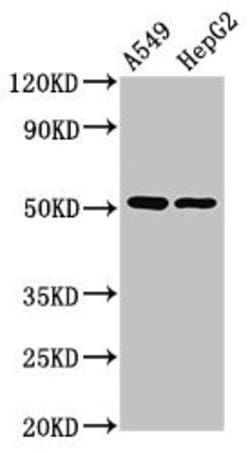
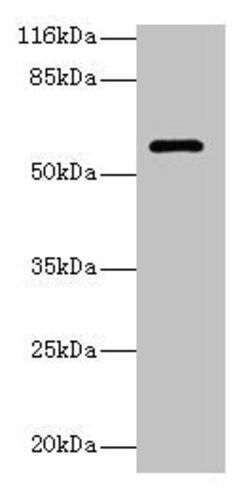
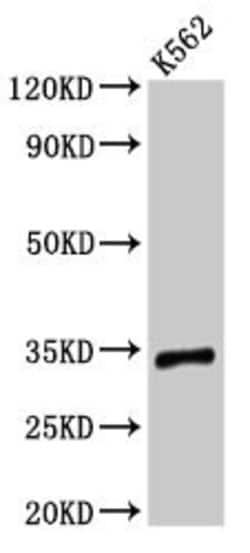
Description
- This gene was initially identified as a locus (RP26) associated with an autosomal recessive form of retinitis pigmentosa (arRP) disease
- This gene encodes a protein with ceramide kinase-like domains, however, the protein does not phosphorylate ceramide and its target substrate is currently unknown
- This protein may be a negative regulator of apoptosis in photoreceptor cells
- Mutations in this gene cause a form of retinitis pigmentosa characterized by autosomal recessive cone and rod dystrophy (arCRD)
- Alternative splicing of this gene results in multiple transcript variants encoding different isoforms and non-coding transcripts.[provided by RefSeq, May 2010].