GPR83 Polyclonal Antibody, Invitrogen™
Manufacturer: Thermo Scientific
Select a Size
| Pack Size | SKU | Availability | Price |
|---|---|---|---|
| Each of 1 | PIPA5113347-Each-of-1 | In Stock | ₹ 43,120.50 |
PIPA5113347 - Each of 1
In Stock
Quantity
1
Base Price: ₹ 43,120.50
GST (18%): ₹ 7,761.69
Total Price: ₹ 50,882.19
Antigen
GPR83
Classification
Polyclonal
Conjugate
Unconjugated
Gene
GPR83
Gene Alias
AW045253; G protein-coupled receptor 72; G protein-coupled receptor 83; Gir; glucocorticoid induced receptor; glucocorticoid-induced receptor; GPR72; Gpr83; G-protein coupled receptor 72; Hcepto9; Jp05; KIAA1540; Probable G-protein coupled receptor 83; RP105; RP39; RP82
Host Species
Rabbit
Purification Method
Protein G
Regulatory Status
RUO
Gene ID (Entrez)
10888
Content And Storage
-20°C or -80°C if preferred
Form
Liquid
Applications
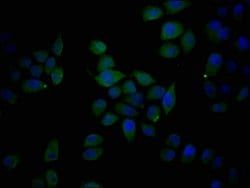
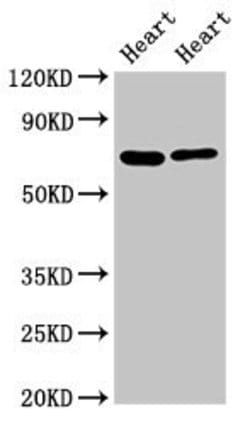
ELISA, Immunocytochemistry, Western Blot
Concentration
1 mg/mL
Formulation
PBS with 50% glycerol and 0.03% ProClin 300; pH 7.4
Gene Accession No.
Q9NYM4
Gene Symbols
GPR83
Immunogen
Recombinant Human Probable G-protein coupled receptor 83 protein (349-423AA)
Quantity
100 μg
Primary or Secondary
Primary
Target Species
Human
Product Type
Antibody
Isotype
IgG
Related Products


Description
- Description GPR83, a 423 A.A protein, is an orphan member of GPCR protein family and is closely related to tachykinin and NPY receptors
- It is a human homolog of mouse GIR protein and is exclusively expressed and selectively up-regulated in brain
- It is a cell surface receptor protein consisting of a putative seven-transmembrane-domain
- Reports suggest GPR83 might be involved in the regulation of immune tolerance mechanism by inducing peripheral generation of Foxp3+ Treg cells.