TIA-1 Polyclonal Antibody, Invitrogen™
Manufacturer: Thermo Scientific
Select a Size
| Pack Size | SKU | Availability | Price |
|---|---|---|---|
| Each of 1 | PIPA5113714-Each-of-1 | In Stock | ₹ 46,502.50 |
PIPA5113714 - Each of 1
In Stock
Quantity
1
Base Price: ₹ 46,502.50
GST (18%): ₹ 8,370.45
Total Price: ₹ 54,872.95
Antigen
TIA-1
Classification
Polyclonal
Conjugate
Unconjugated
Gene
TIA1
Gene Alias
2310050N03Rik; AI256674; cytotoxic granule-associated RNA binding protein 1; cytotoxic granule-associated RNA-binding protein 1; mTIA-1; Nucleolysin TIA-1; nucleolysin TIA-1 isoform p40; p40 TIA 1; p40-TIA-1; p40-TIA-1 (containing p15-TIA-1); RNA-binding protein TIA-1; T-cell-restricted intracellular antigen-1; Tia; TIA 1; TIA1; TIA-1; TIA1 cytotoxic granule-associated RNA binding protein; TIA1 protein; TIAL1; TIAR; WDM
Host Species
Rabbit
Purification Method
Affinity chromatography
Regulatory Status
RUO
Gene ID (Entrez)
7072
Content And Storage
-20° C, Avoid Freeze/Thaw Cycles
Form
Liquid
Applications
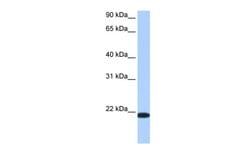
Immunoprecipitation, Western Blot
Concentration
0.5 mg/mL
Formulation
PBS with 2% sucrose and 0.09% sodium azide
Gene Accession No.
P31483
Gene Symbols
TIA1
Immunogen
Synthetic peptide directed towards the C terminal region of human TIA1
Quantity
100 μL
Primary or Secondary
Primary
Target Species
Human
Product Type
Antibody
Isotype
IgG
Related Products
Description
- Immunogen sequence: QAWNQQGFNQ TQSSAPWMGP NYGVQPPQGQ NGSMLPNQPS GYRVAGYETQ For short term use, store at 2-8°C up to 1 week
- For long term storage, store at -20°C in small aliquots to prevent freeze-thaw cycles
- Predicted homology: Cow: 82%; Guinea Pig: 93%; Horse: 93%; Human: 100%; Mouse: 92%; Rabbit: 92%; Rat: 93% Noggin is involved in numerous developmental processes, such as neural tube fusion and joint formation
- The morphogenesis of organs is initiated by a downgrowth from a layer of epithelial stem cells
- This process is achieved through the receipt of signals from 1) a WNT protein (WNT3A) to stabilize beta-catenin; and 2) Noggin, which is a bone morphogenetic protein inhibitor
- Noggin mutations in unrelated families with proximal symphalangism (SYM1) and multiple synostoses syndrome (SYNS1) have been identified, which have multiple joint fusion as their principal defect.