PIPA5114146
Ubiquilin 2 Polyclonal Antibody, Invitrogen™
Manufacturer: Thermo Scientific
Select a Size
| Pack Size | SKU | Availability | Price |
|---|---|---|---|
| Each of 1 | PIPA5114146-Each-of-1 | In Stock | ₹ 46,502.50 |
PIPA5114146 - Each of 1
In Stock
Quantity
1
Base Price: ₹ 46,502.50
GST (18%): ₹ 8,370.45
Total Price: ₹ 54,872.95
Antigen
Ubiquilin 2
Classification
Polyclonal
Conjugate
Unconjugated
Gene
UBQLN2
Gene Alias
ALS15; CHAP1; DSK2; DSK2 homolog; HRIHFB2157; N4BP4; Nedd4 binding protein 4; Plic2; Plic-2; protein linking IAP with cytoskeleton 2; RGD1563566; ubiquilin 2; ubiquilin-2; Ubiquitin-like product Chap1/Dsk2; Ubiquitin-related protein; Ubqln2
Host Species
Rabbit
Purification Method
Affinity chromatography
Regulatory Status
RUO
Gene ID (Entrez)
29978
Content And Storage
-20° C, Avoid Freeze/Thaw Cycles
Form
Liquid
Applications
Western Blot
Concentration
0.5 mg/mL
Formulation
PBS with 2% sucrose and 0.09% sodium azide
Gene Accession No.
Q9UHD9
Gene Symbols
UBQLN2
Immunogen
Synthetic peptide directed towards the N terminal region of human UBQLN2
Quantity
100 μL
Primary or Secondary
Primary
Target Species
Human
Product Type
Antibody
Isotype
IgG
Related Products
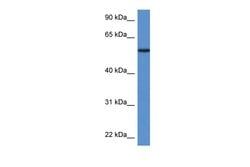
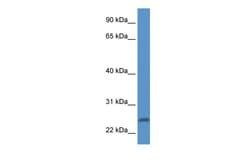
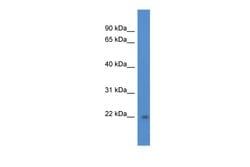
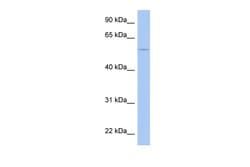
Description
- Immunogen sequence: LKDQDTLIQH GIHDGLTVHL VIKSQNRPQG QSTQPSNAAG TNTTSASTPR For short term use, store at 2-8°C up to 1 week
- For long term storage, store at -20°C in small aliquots to prevent freeze-thaw cycles
- Predicted homology: Cow: 100%; Dog: 100%; Guinea Pig: 93%; Human: 100%; Mouse: 87%; Rabbit: 87%; Rat: 93% This gene encodes an ubiquitin-like protein (ubiquilin) that shares high degree of similarity with related products in yeast, rat and frog
- Ubiquilins contain a N-terminal ubiquitin-like domain and a C-terminal ubiquitin-associated domain
- They physically associate with both proteasomes and ubiquitin ligases; and thus, are thought to functionally link the ubiquitination machinery to the proteasome to affect in vivo protein degradation
- This ubiquilin has also been shown to bind the ATPase domain of the Hsp70-like Stch protein.