PIPA5114702
AEBP1 Polyclonal Antibody, Invitrogen™
Manufacturer: Thermo Scientific
Select a Size
| Pack Size | SKU | Availability | Price |
|---|---|---|---|
| Each of 1 | PIPA5114702-Each-of-1 | In Stock | ₹ 46,502.50 |
PIPA5114702 - Each of 1
In Stock
Quantity
1
Base Price: ₹ 46,502.50
GST (18%): ₹ 8,370.45
Total Price: ₹ 54,872.95
Antigen
AEBP1
Classification
Polyclonal
Conjugate
Unconjugated
Gene
AEBP1
Gene Alias
ACLP; adipocyte enhancer-binding protein 1; AE binding protein 1; AE-binding protein 1; AEBP1; Aortic carboxypeptidase-like protein; FLJ33612; transcription factor AEBP1
Host Species
Rabbit
Purification Method
Affinity chromatography
Regulatory Status
RUO
Gene ID (Entrez)
11568, 165, 305494
Content And Storage
-20°C
Form
Liquid
Applications
Immunocytochemistry, Western Blot
Concentration
1 mg/mL
Formulation
PBS with 50% glycerol and 0.02% sodium azide
Gene Accession No.
A2RUV9, Q640N1, Q8IUX7
Gene Symbols
AEBP1
Immunogen
A synthesized peptide derived from human AEBP1(Accession Q8IUX7), corresponding to amino acid residues K101-K151.
Quantity
100 μL
Primary or Secondary
Primary
Target Species
Human, Mouse, Rat
Product Type
Antibody
Isotype
IgG
Related Products
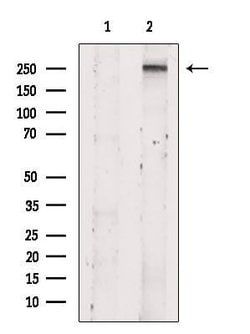
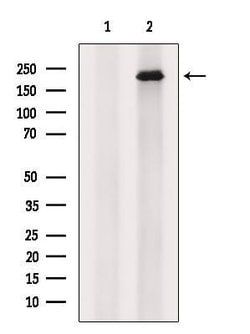
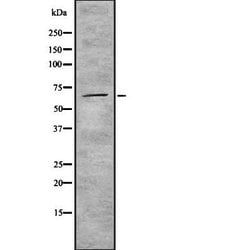
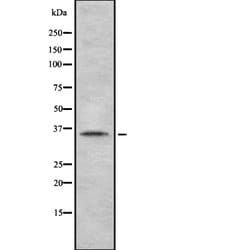

Description
- Antibody detects endogenous levels of total AEBP1
- The adipocyte enhancer binding protein 1 (AEBP1) is a transcriptional repressor with carboxypeptidase (CP) activity
- This protein binds to a regulatory sequence, adipocyte enhancer 1 (AE-1), located in the proximal promoter region of the adipose P2 (aP2) gene, which encodes the adipocyte fatty-acid binding protein
- It is characterized as a member of the regulatory B-like CP family
- This protein seems to be activated by a novel mechanism, whereby the direct binding of DNA enhances its protease activity
- AEBP1 may play a role in differentiated vascular smooth muscle cells.