DUSP26 Polyclonal Antibody, Invitrogen™
Manufacturer: Thermo Scientific
Select a Size
| Pack Size | SKU | Availability | Price |
|---|---|---|---|
| Each of 1 | PIPA5114730-Each-of-1 | In Stock | ₹ 46,502.50 |
PIPA5114730 - Each of 1
In Stock
Quantity
1
Base Price: ₹ 46,502.50
GST (18%): ₹ 8,370.45
Total Price: ₹ 54,872.95
Antigen
DUSP26
Classification
Polyclonal
Conjugate
Unconjugated
Gene
DUSP26
Gene Alias
2310043K02Rik; DSP-4; dual specificity phosphatase 26 (putative); dual specificity phosphatase SKRP3; Dual specificity protein phosphatase 26; dual-specificity phosphatase SKRP3; DUSP24; DUSP26; LDP4; LDP-4; Low-molecular-mass dual-specificity phosphatase 4; MAP kinase phosphatase 8; MGC1136; MGC2627; Mitogen-activated protein kinase phosphatase 8; MKP8; MKP-8; NATA1; NEAP; neuroendocrine-associated phosphatase; Novel amplified gene in thyroid anaplastic cancer; RGD1310090; Skrp3
Host Species
Rabbit
Purification Method
Affinity chromatography
Regulatory Status
RUO
Gene ID (Entrez)
306527, 66959, 78986
Content And Storage
-20°C
Form
Liquid
Applications
Western Blot
Concentration
1 mg/mL
Formulation
PBS with 50% glycerol and 0.02% sodium azide
Gene Accession No.
Q5FVI9, Q9BV47, Q9D700
Gene Symbols
DUSP26
Immunogen
A synthesized peptide derived from human DUSP26(Accession Q9BV47), corresponding to amino acid residues Q74-F124.
Quantity
100 μL
Primary or Secondary
Primary
Target Species
Human, Mouse, Rat
Product Type
Antibody
Isotype
IgG
Related Products
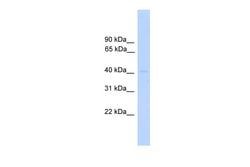
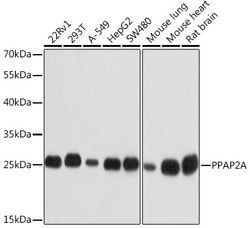
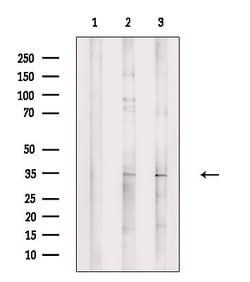
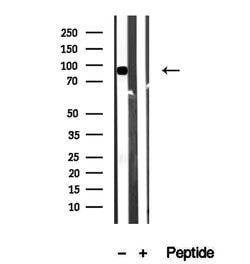
Description
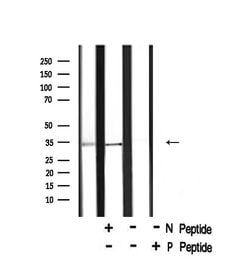
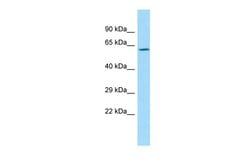
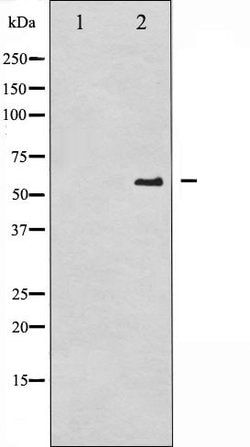
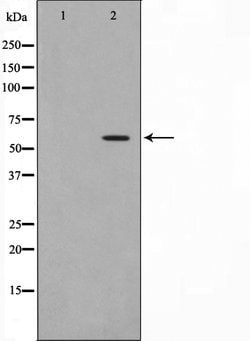
- Antibody detects endogenous levels of total DUSP26
- This gene encodes a member of the tyrosine phosphatase family of proteins and exhibits dual specificity by dephosphorylating tyrosine as well as serine and threonine residues
- This gene has been described as both a tumor suppressor and an oncogene depending on the cellular context
- This protein may regulate neuronal proliferation and has been implicated in the progression of glioblastoma through its ability to dephosphorylate the p53 tumor suppressor
- Alternative splicing results in multiple transcript variants
- [provided by RefSeq, Feb 2015].