PGAM5 Polyclonal Antibody, Invitrogen™
Manufacturer: Thermo Scientific
Select a Size
| Pack Size | SKU | Availability | Price |
|---|---|---|---|
| Each of 1 | PIPA5115745-Each-of-1 | In Stock | ₹ 46,502.50 |
PIPA5115745 - Each of 1
In Stock
Quantity
1
Base Price: ₹ 46,502.50
GST (18%): ₹ 8,370.45
Total Price: ₹ 54,872.95
Antigen
PGAM5
Classification
Polyclonal
Conjugate
Unconjugated
Gene
PGAM5
Gene Alias
2610528A17Rik; Bcl-XL-binding protein v68; BXLBV68; PGAM family member 5, mitochondrial serine/threonine protein phosphatase; PGAM family member 5, serine/threonine protein phosphatase, mitochondrial; PGAM5; Phosphoglycerate mutase family member 5; RGD1312028; serine/threonine-protein phosphatase PGAM5, mitochondrial
Host Species
Rabbit
Purification Method
Affinity chromatography
Regulatory Status
RUO
Gene ID (Entrez)
192111, 288731, 72542
Content And Storage
-20°C
Form
Liquid
Applications
Immunohistochemistry (Paraffin), Western Blot
Concentration
1 mg/mL
Formulation
PBS with 50% glycerol and 0.02% sodium azide
Gene Accession No.
Q562B5, Q8BX10, Q96HS1
Gene Symbols
PGAM5
Immunogen
A synthesized peptide derived from human PGAM5(Accession Q96HS1), corresponding to amino acid residues T156-A206.
Quantity
100 μL
Primary or Secondary
Primary
Target Species
Human, Mouse, Rat
Product Type
Antibody
Isotype
IgG
Related Products




Description
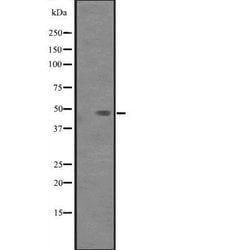
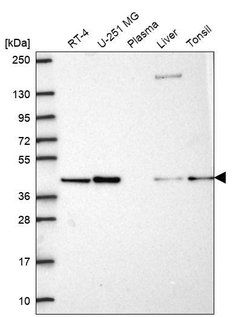
- Antibody detects endogenous levels of total PGAM5
- Displays phosphatase activity for serine/threonine residues, and, dephosphorylates and activates MAP3K5 kinase
- Has apparently no phosphoglycerate mutase activity
- May be regulator of mitochondrial dynamics
- Substrate for a KEAP1-dependent ubiquitin ligase complex
- Contributes to the repression of NFE2L2-dependent gene expression
- Acts as a central mediator for programmed necrosis induced by TNF, by reactive oxygen species and by calcium ionophore
- [UniProt]