RECQL5 Polyclonal Antibody, Invitrogen™
Manufacturer: Thermo Scientific
Select a Size
| Pack Size | SKU | Availability | Price |
|---|---|---|---|
| Each of 1 | PIPA5115832-Each-of-1 | In Stock | ₹ 46,502.50 |
PIPA5115832 - Each of 1
In Stock
Quantity
1
Base Price: ₹ 46,502.50
GST (18%): ₹ 8,370.45
Total Price: ₹ 54,872.95
Antigen
RECQL5
Classification
Polyclonal
Conjugate
Unconjugated
Gene
RECQL5
Gene Alias
ATP-dependent DNA helicase Q5; DNA helicase, RecQ-like type 5; FLJ90603; LOW QUALITY PROTEIN: ATP-dependent DNA helicase Q5; RecQ helicase-like 5; RecQ like helicase 5; RecQ protein 5; RecQ protein-like 5; RecQ protein-like 5 like; RECQ5; Recq5b; RECQL5; Recql5b; RECQL5beta; recql5l
Host Species
Rabbit
Purification Method
Affinity chromatography
Regulatory Status
RUO
Gene ID (Entrez)
170472, 287834, 9400
Content And Storage
-20°C
Form
Liquid
Applications
Immunocytochemistry, Immunohistochemistry (Paraffin), Western Blot
Concentration
1 mg/mL
Formulation
PBS with 50% glycerol and 0.02% sodium azide
Gene Accession No.
D4ACP5, O94762, Q8VID5
Gene Symbols
RECQL5
Immunogen
A synthesized peptide derived from human RECQL5(Accession O94762), corresponding to amino acid residues E808-S858.
Quantity
100 μL
Primary or Secondary
Primary
Target Species
Human, Mouse, Rat
Product Type
Antibody
Isotype
IgG
Related Products

Description
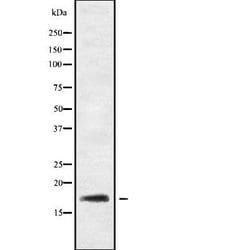
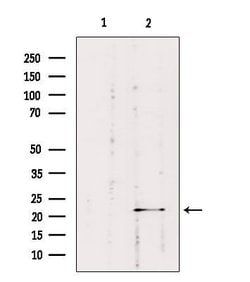
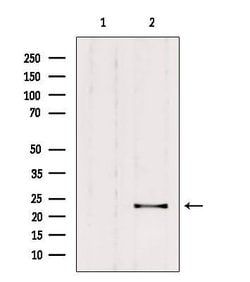
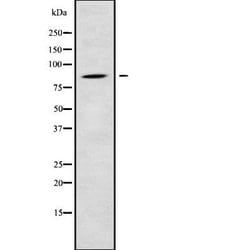
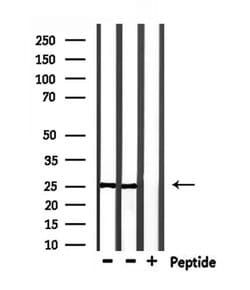
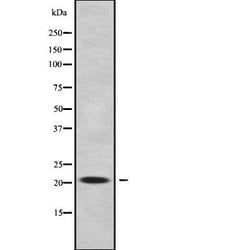
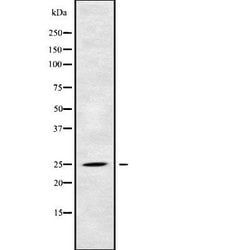
- Antibody detects endogenous levels of total RECQL5
- RECQL5 gene ontology annotations related to this gene include cellular response to camptothecin; chromosome separation; DNA duplex unwinding; DNA recombination; DNA repair; DNA replication; double-strand break repair via homologous recombination; mitotic sister chromatid segregation; negative regulation of double-strand break repair via homologous recombination; negative regulation of mitotic cell cycle; negative regulation of transcription elongation from RNA polymerase II promoter; replication-born double-strand break repair via sister chromatid exchange; response to X-ray.