PIPA5116282
OR2AG2 Polyclonal Antibody, Invitrogen™
Manufacturer: Thermo Scientific
Select a Size
| Pack Size | SKU | Availability | Price |
|---|---|---|---|
| Each of 1 | PIPA5116282-Each-of-1 | In Stock | ₹ 46,502.50 |
PIPA5116282 - Each of 1
In Stock
Quantity
1
Base Price: ₹ 46,502.50
GST (18%): ₹ 8,370.45
Total Price: ₹ 54,872.95
Antigen
OR2AG2
Classification
Polyclonal
Formulation
PBS with 0.09% sodium azide
Gene Accession No.
A6NM03
Gene Symbols
OR2AG2
Immunogen
KLH conjugated synthetic peptide between 64-90 amino acids from the N-terminal region of human OR2AG2
Quantity
400 μL
Primary or Secondary
Primary
Target Species
Human
Product Type
Antibody
Isotype
IgG
Applications
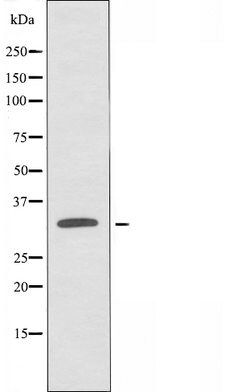
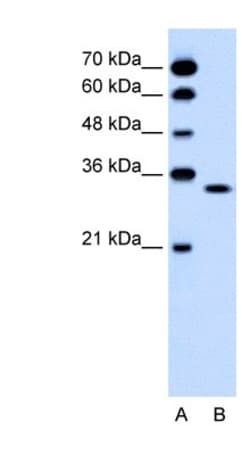
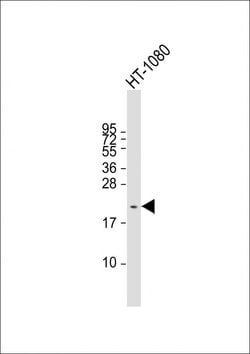
Western Blot
Conjugate
Unconjugated
Gene
OR2AG2
Gene Alias
Olfactory receptor 2AG2; olfactory receptor family 2 subfamily AG member 2; olfactory receptor OR11-76 pseudogene; olfactory receptor, family 2, subfamily AG, member 2 pseudogene; OR11-76; OR2AG2; OR2AG2P
Host Species
Rabbit
Purification Method
Protein A
Regulatory Status
RUO
Gene ID (Entrez)
338755
Content And Storage
Store at 4°C short term. For long term storage, store at -20°C, avoiding freeze/thaw cycles.
Form
Liquid
Related Products
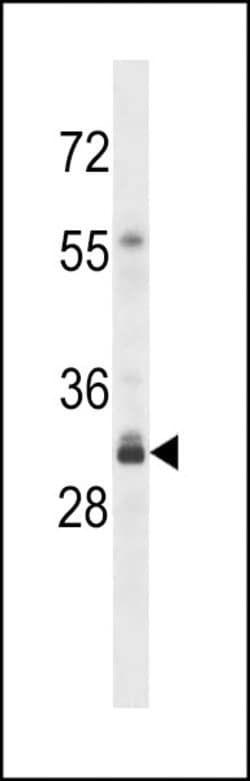
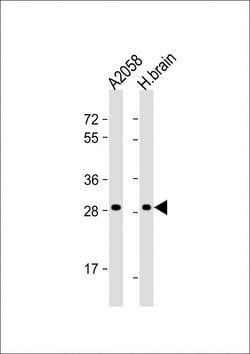
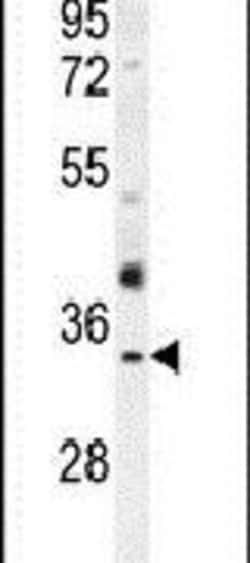
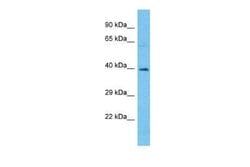
Description
- Description Olfactory receptors interact with odorant molecules in the nose, to initiate a neuronal response that triggers the perception of a smell
- The olfactory receptor proteins are members of a large family of G-protein-coupled receptors (GPCR) arising from single coding-exon genes
- Olfactory receptors share a 7-transmembrane domain structure with many neurotransmitter and hormone receptors and are responsible for the recognition and G protein-mediated transduction of odorant signals
- The olfactory receptor gene family is the largest in the genome
- The nomenclature assigned to the olfactory receptor genes and proteins for this organism is independent of other organisms.