ACSS3 Polyclonal Antibody, Invitrogen™
Manufacturer: Thermo Scientific
Select a Size
| Pack Size | SKU | Availability | Price |
|---|---|---|---|
| Each of 1 | PIPA5116567-Each-of-1 | In Stock | ₹ 45,434.50 |
PIPA5116567 - Each of 1
In Stock
Quantity
1
Base Price: ₹ 45,434.50
GST (18%): ₹ 8,178.21
Total Price: ₹ 53,612.71
Antigen
ACSS3
Classification
Polyclonal
Conjugate
Unconjugated
Gene
Acss3
Gene Alias
8430416H19Rik; Acetate--CoA ligase 3; ACSS3; Acyl-CoA synthetase short-chain family member 3; acyl-CoA synthetase short-chain family member 3, mitochondrial; AMP-binding enzyme, 33217; Gm874; Propionate--CoA ligase; RGD1307051
Host Species
Rabbit
Purification Method
Affinity chromatography
Regulatory Status
RUO
Gene ID (Entrez)
314800, 380660
Content And Storage
-20° C, Avoid Freeze/Thaw Cycles
Form
Liquid
Applications
Western Blot
Concentration
1.22 mg/mL
Formulation
PBS with 50% glycerol and 0.01% thimerosal; pH 7.3
Gene Accession No.
Q14DH7
Gene Symbols
Acss3
Immunogen
Recombinant fusion protein containing a sequence corresponding to amino acids 30-280 of human ACSS3 (NP_0788361)
Quantity
100 μL
Primary or Secondary
Primary
Target Species
Mouse, Rat
Product Type
Antibody
Isotype
IgG
Related Products


Description
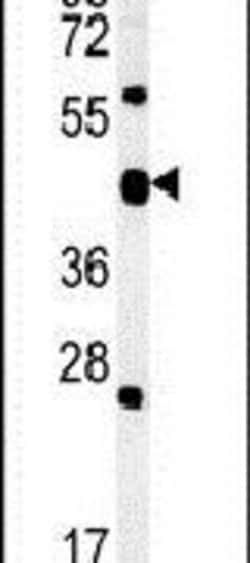
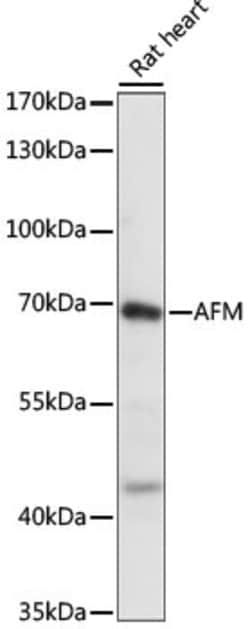
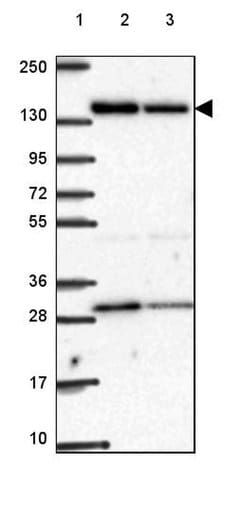
- Positive Samples: Mouse kidney, Mouse lung, Rat kidney, Rat liver Immunogen sequence: AGAALRALVV PGPRGGLGGR GCRALSSGSG SEYKTHFAAS VTDPERFWGK AAEQISWYKP WTKTLENKHS PSTRWFVEGM LNICYNAVDR HIENGKGDKI AIIYDSPVTN TKATFTYKEV LEQVSKLAGV LVKHGIKKGD TVVIYMPMIP QAMYTMLACA RIGAIHSLIF GGFASKELSS RIDHVKPKVV VTASFGIEPG RRVEYVPLVE EALKIGQHKP DKILIYNRPN MEAVPLAPGR DLDWDEEMAK A Catalyzes the synthesis of acetyl-CoA from short-chain fatty acids (PubMed:28003429)
- Propionate is the preferred substrate (PubMed:28003429)
- Can utilize acetate and butyrate with a much lower affinity
- [UniProt]