PIPA5116724
REEP2 Polyclonal Antibody, Invitrogen™
Manufacturer: Thermo Scientific
Select a Size
| Pack Size | SKU | Availability | Price |
|---|---|---|---|
| Each of 1 | PIPA5116724-Each-of-1 | In Stock | ₹ 46,502.50 |
PIPA5116724 - Each of 1
In Stock
Quantity
1
Base Price: ₹ 46,502.50
GST (18%): ₹ 8,370.45
Total Price: ₹ 54,872.95
Antigen
REEP2
Classification
Polyclonal
Conjugate
Unconjugated
Gene
REEP2
Gene Alias
C2orf19; C5orf19; LOC532432 protein; LOC682105; receptor accessory protein 2; receptor expression-enhancing protein 2; Reep2; SGC32445; SPG72; Yip2d
Host Species
Rabbit
Purification Method
Affinity chromatography
Regulatory Status
RUO
Gene ID (Entrez)
225362, 682105
Content And Storage
-20° C, Avoid Freeze/Thaw Cycles
Form
Liquid
Applications
Immunocytochemistry, Immunohistochemistry (Paraffin), Western Blot
Concentration
0.53 mg/mL
Formulation
PBS with 50% glycerol and 0.01% thimerosal; pH 7.3
Gene Accession No.
Q8VCD6
Gene Symbols
REEP2
Immunogen
Recombinant fusion protein containing a sequence corresponding to amino acids 93-252 of human REEP2 (NP_0576902)
Quantity
100 μL
Primary or Secondary
Primary
Target Species
Mouse, Rat
Product Type
Antibody
Isotype
IgG
Related Products


Description
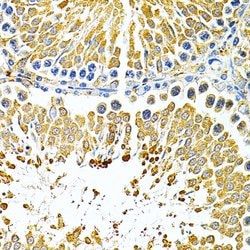
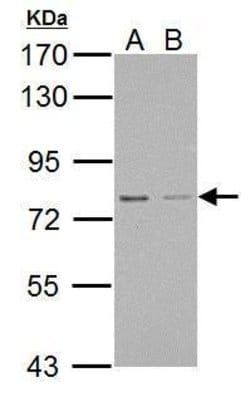
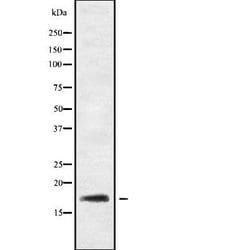
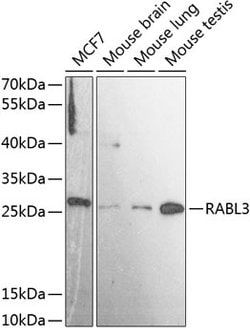
- Positive Samples: RD, Mouse brain, Mouse testis, Rat testis Immunogen sequence: HPTLSNKEKE IDEYITQARD KSYETMMRVG KRGLNLAANA AVTAAAKGVL SEKLRSFSMQ DLTLIRDEDA LPLQRPDGRL RPSPGSLLDT IEDLGDDPAL SLRSSTNPAD SRTEASEDDM GDKAPKRAKP IKKAPKAEPL ASKTLKTRPK KKTSGGGDSA Mammalian odorant receptors require accessory proteins such as RTP1 and RTP2 for functional cell surface expression
- Receptor expression-enhancing protein (REEP) family members are transmembrane proteins which interact with odorant receptor proteins and may enhance the odorant receptor responses to odorants
- Recently studies have shown other chemosensory receptors such as bitter taste receptors are also influenced by RTP and REEP family members.