ABLIM3 Polyclonal Antibody, Invitrogen™
Manufacturer: Thermo Scientific
Select a Size
| Pack Size | SKU | Availability | Price |
|---|---|---|---|
| Each of 1 | PIPA5116761-Each-of-1 | In Stock | ₹ 46,502.50 |
PIPA5116761 - Each of 1
In Stock
Quantity
1
Base Price: ₹ 46,502.50
GST (18%): ₹ 8,370.45
Total Price: ₹ 54,872.95
Antigen
ABLIM3
Classification
Polyclonal
Conjugate
Unconjugated
Gene
Ablim3
Gene Alias
ABLIM3; abLIM-3; actin binding LIM protein family member 3; actin binding LIM protein family, member 3; actin-binding LIM protein 3; Actin-binding LIM protein family member 3; AW990719; D930036B08Rik; HMFN1661; KIAA0843; RGD1565118
Host Species
Rabbit
Purification Method
Affinity chromatography
Regulatory Status
RUO
Gene ID (Entrez)
307395, 319713
Content And Storage
-20° C, Avoid Freeze/Thaw Cycles
Form
Liquid
Applications
Western Blot
Concentration
1.29 mg/mL
Formulation
PBS with 50% glycerol and 0.01% thimerosal; pH 7.3
Gene Accession No.
Q69ZX8
Gene Symbols
Ablim3
Immunogen
Recombinant fusion protein containing a sequence corresponding to amino acids 350-520 of human ABLIM3 (NP_0012879571)
Quantity
100 μL
Primary or Secondary
Primary
Target Species
Mouse, Rat
Product Type
Antibody
Isotype
IgG
Related Products
Description
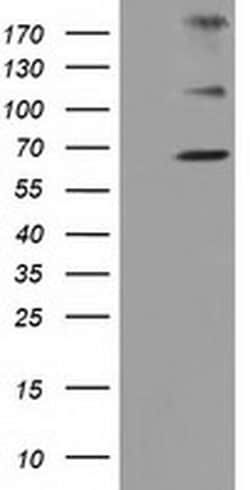
- Positive Samples: Mouse lung, Rat brain Immunogen sequence: TSEDISQTSK YSPIYSPDPY YASESEYWTY HGSPKVPRAR RFSSGGEEDD FDRSMHKLQS GIGRLILKEE MKARSSSYAD PWTPPRSSTS SREALHTAGY EMSLNGSPRS HYLADSDPLI SKSASLPAYR RNGLHRTPSA DLFHYDSMNA VNWGMREYKI YPYELLLVTT R The LIM domain is a double zinc finger structure that promotes protein-protein interactions
- LIM domain proteins, such as ABLIM3, play roles in embryonic development, cell lineage determination, and cancer (Krupp et al., 2006 ).