PIPA5116787
RPS28 Polyclonal Antibody, Invitrogen™
Manufacturer: Thermo Scientific
Select a Size
| Pack Size | SKU | Availability | Price |
|---|---|---|---|
| Each of 1 | PIPA5116787-Each-of-1 | In Stock | ₹ 46,502.50 |
PIPA5116787 - Each of 1
In Stock
Quantity
1
Base Price: ₹ 46,502.50
GST (18%): ₹ 8,370.45
Total Price: ₹ 54,872.95
Antigen
RPS28
Classification
Polyclonal
Conjugate
Unconjugated
Gene
RPS28
Gene Alias
40S ribosomal protein S28; DBA15; fb07a10; ribosomal protein S28; rps28; S28; Small ribosomal subunit protein eS28; wu:fb07a10; wu:fb94f01; zgc:73367
Host Species
Rabbit
Purification Method
Affinity chromatography
Regulatory Status
RUO
Gene ID (Entrez)
54127, 6234, 691531
Content And Storage
-20° C, Avoid Freeze/Thaw Cycles
Form
Liquid
Applications
Immunocytochemistry, Western Blot
Concentration
3.44 mg/mL
Formulation
PBS with 50% glycerol and 0.01% thimerosal; pH 7.3
Gene Accession No.
P62857, P62858, P62859
Gene Symbols
RPS28
Immunogen
Recombinant fusion protein containing a sequence corresponding to amino acids 1-69 of human RPS28 (NP_0010221)
Quantity
100 μL
Primary or Secondary
Primary
Target Species
Human, Mouse, Rat
Product Type
Antibody
Isotype
IgG
Related Products
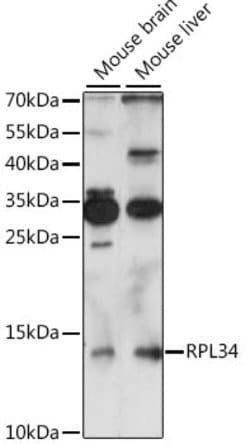


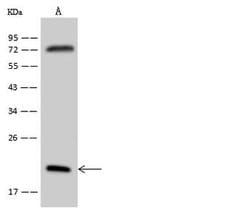

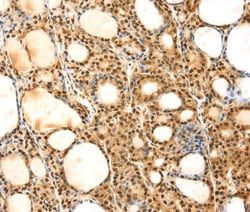
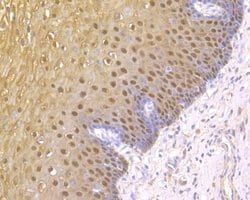

Description
- Positive Samples: HepG2, Rat liver Immunogen sequence: MDTSRVQPIK LARVTKVLGR TGSQGQCTQV RVEFMDDTSR SIIRNVKGPV REGDVLTLLE SEREARRLR TRPCs, mammalian homologs of the Drosophila transient receptor potential (trp) protein, are ion channels that are thought to mediate capacitative calcium entry into the cell
- TRP-PLIK is a protein that is both an ion channel and a kinase
- As a channel, it conducts calcium and monovalent cations to depolarize cells and increase intracellular calcium
- As a kinase, it is capable of phosphorylating itself and other substrates
- The kinase activity is necessary for channel function, as shown by its dependence on intracellular ATP and by the kinase mutants.