POU3F2 Polyclonal Antibody, Invitrogen™
Manufacturer: Thermo Scientific
Select a Size
| Pack Size | SKU | Availability | Price |
|---|---|---|---|
| Each of 1 | PIPA5116864-Each-of-1 | In Stock | ₹ 46,502.50 |
PIPA5116864 - Each of 1
In Stock
Quantity
1
Base Price: ₹ 46,502.50
GST (18%): ₹ 8,370.45
Total Price: ₹ 54,872.95
Antigen
POU3F2
Classification
Polyclonal
Conjugate
Unconjugated
Gene
POU3F2
Gene Alias
7-Oct; 9430075J19Rik; A230098E07Rik; Brain-2; brain-2 class III POU-domain protein; brain-specific homeobox/POU domain protein 2; BRN2; Brn-2; Nervous system-specific octamer-binding transcription factor N-Oct-3; N-Oct3; OCT7; Oct-7; Octamer-binding protein 7; octamer-binding transcription factor 7; Otf7; OTF-7; POU class 3 homeobox 2; POU domain, class 3, transcription factor 2; POU3F2; POUF3; protein Brn-2; Unknown (protein for MGC:137739)
Host Species
Rabbit
Purification Method
Affinity chromatography
Regulatory Status
RUO
Gene ID (Entrez)
5454
Content And Storage
-20° C, Avoid Freeze/Thaw Cycles
Form
Liquid
Applications
Western Blot
Concentration
1.09 mg/mL
Formulation
PBS with 50% glycerol and 0.01% thimerosal; pH 7.3
Gene Accession No.
P20265
Gene Symbols
POU3F2
Immunogen
Recombinant fusion protein containing a sequence corresponding to amino acids 1-68 of human POU3F2 (NP_0055952)
Quantity
100 μL
Primary or Secondary
Primary
Target Species
Human
Product Type
Antibody
Isotype
IgG
Related Products
Description
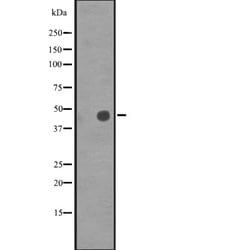
- Positive Samples: U-87MG, HepG2, Jurkat Immunogen sequence: MATAASNHYS LLTSSASIVH AEPPGGMQQG AGGYREAQSL VQGDYGALQS NGHPLSHAHQ WITALSHG This gene encodes a member of the POU-III class of neural transcription factors
- The encoded protein is involved in neuronal differentiation and enhances the activation of corticotropin-releasing hormone regulated genes
- Overexpression of this protein is associated with an increase in the proliferation of melanoma cells.