PIPA5117116
LHX4 Polyclonal Antibody, Invitrogen™
Manufacturer: Thermo Scientific
Select a Size
| Pack Size | SKU | Availability | Price |
|---|---|---|---|
| Each of 1 | PIPA5117116-Each-of-1 | In Stock | ₹ 46,502.50 |
PIPA5117116 - Each of 1
In Stock
Quantity
1
Base Price: ₹ 46,502.50
GST (18%): ₹ 8,370.45
Total Price: ₹ 54,872.95
Antigen
LHX4
Classification
Polyclonal
Conjugate
Unconjugated
Gene
LHX4
Gene Alias
A330062J17Rik; CPHD4; Gsh4; Gsh-4; Lhx4; LIM homeo box protein 4; LIM homeobox 4; LIM homeobox protein 4; LIM/homeobox protein Lhx4; LXH4
Host Species
Rabbit
Purification Method
Affinity chromatography
Regulatory Status
RUO
Gene ID (Entrez)
16872, 360858, 89884
Content And Storage
-20° C, Avoid Freeze/Thaw Cycles
Form
Liquid
Applications
Immunohistochemistry (Paraffin), Western Blot
Concentration
0.32 mg/mL
Formulation
PBS with 50% glycerol and 0.02% sodium azide; pH 7.3
Gene Accession No.
P53776, Q969G2
Gene Symbols
LHX4
Immunogen
Recombinant fusion protein containing a sequence corresponding to amino acids 121-390 of human LHX4 (NP_2031291)
Quantity
100 μL
Primary or Secondary
Primary
Target Species
Human, Mouse, Rat
Product Type
Antibody
Isotype
IgG
Related Products
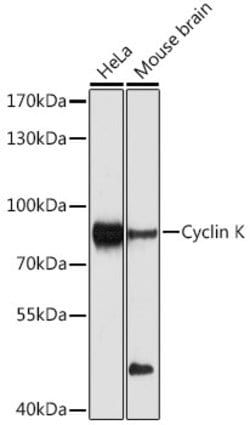
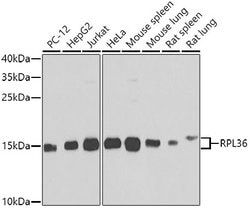
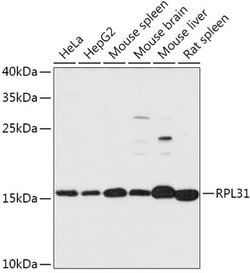
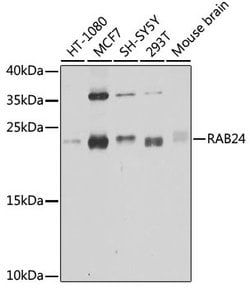
Description
- Positive Samples: Mouse brain, Rat brain Immunogen sequence: NRQLATGDEF YLMEDGRLVC KEDYETAKQN DDSEAGAKRP RTTITAKQLE TLKNAYKNSP KPARHVREQL SSETGLDMRV VQVWFQNRRA KEKRLKKDAG RHRWGQFYKS VKRSRGSSKQ EKESSAEDCG VSDSELSFRE DQILSELGHT NRIYGNVGDV TGGQLMNGSF SMDGTGQSYQ DLRDGSPYGI PQSPSSISSL PSHAPLLNGL DYTVDSNLGI IAHAGQGVSQ TLRAMAGGPT SDISTGSSVG YPDFPTSPGS WLDEMDHPPF This gene encodes a member of a large protein family which contains the LIM domain, a unique cysteine-rich zinc-binding domain
- The encoded protein may function as a transcriptional regulator and be involved in control of differentiation and development of the pituitary gland
- Mutations in this gene are associated with syndromic short stature and pituitary and hindbrain defects
- An alternative splice variant has been described but its biological nature has not been determined.