DPP3 Polyclonal Antibody, Invitrogen™
Manufacturer: Thermo Scientific
Select a Size
| Pack Size | SKU | Availability | Price |
|---|---|---|---|
| Each of 1 | PIPA5119086-Each-of-1 | In Stock | ₹ 42,408.50 |
PIPA5119086 - Each of 1
In Stock
Quantity
1
Base Price: ₹ 42,408.50
GST (18%): ₹ 7,633.53
Total Price: ₹ 50,042.03
Antigen
DPP3
Classification
Polyclonal
Conjugate
Unconjugated
Gene
DPP3
Gene Alias
4930533O14Rik; C86324; Dipeptidyl aminopeptidase III; dipeptidyl arylamidase III; Dipeptidyl peptidase 3; dipeptidyl peptidase III; dipeptidylpeptidase 3; dipeptidyl-peptidase 3; dipeptidylpeptidase III; dipeptidyl-peptidase III; DPP III; Dpp3; DPPIII; Enkephalinase B; hCG_2016942
Host Species
Rabbit
Purification Method
Antigen affinity chromatography
Regulatory Status
RUO
Gene ID (Entrez)
10072
Content And Storage
-20°C
Form
Liquid
Applications
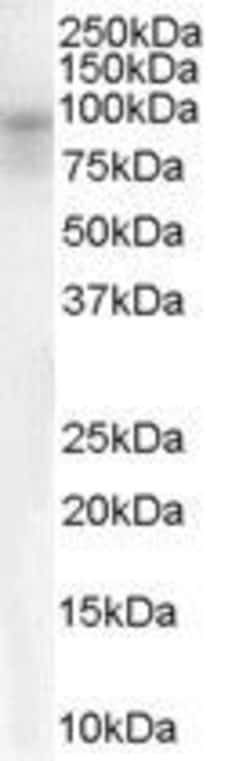
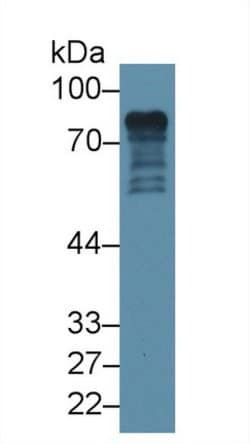
Immunohistochemistry (Paraffin), Western Blot
Concentration
500 μg/mL
Formulation
PBS with 50% glycerol and 0.05% ProClin 300
Gene Accession No.
Q9NY33
Gene Symbols
DPP3
Immunogen
Recombinant protein Dipeptidyl Peptidase 3. The antigen corresponds to amino acid range 2-261 of the target protein.
Quantity
200 μL
Primary or Secondary
Primary
Target Species
Human
Product Type
Antibody
Isotype
IgG
Related Products
Description
- This gene encodes a protein that is a member of the M49 family of metallopeptidases
- This cytoplasmic protein binds a single zinc ion with its zinc-binding motif (HELLGH) and has post-proline dipeptidyl aminopeptidase activity, cleaving Xaa-Pro dipeptides from the N-termini of proteins
- Increased activity of this protein is associated with endometrial and ovarian cancers
- Alternate transcriptional splice variants have been characterized.