TPSB2 Polyclonal Antibody, Invitrogen™
Manufacturer: Thermo Scientific
Select a Size
| Pack Size | SKU | Availability | Price |
|---|---|---|---|
| Each of 1 | PIPA5121533-Each-of-1 | In Stock | ₹ 19,669.00 |
PIPA5121533 - Each of 1
In Stock
Quantity
1
Base Price: ₹ 19,669.00
GST (18%): ₹ 3,540.42
Total Price: ₹ 23,209.42
Antigen
TPSB2
Classification
Polyclonal
Conjugate
Unconjugated
Gene
Tpsb2
Gene Alias
AV011504; EC 3.4.21; EC 3.4.21.59; mast cell protease 6; mast cell tryptase beta II; mast cell tryptase beta III; Mcp6; Mcp-6; Mcpt6; MMCP-6; rMCP-6; testicular tissue protein Li 163; TPS2; TPS2tryptase beta-2; Tpsb2; tryptase beta 2; tryptase beta 2 (gene/pseudogene); tryptase beta II; tryptase beta III; tryptase beta-2; Tryptase II; tryptase III; Tryptase-2; tryptaseB; tryptaseC; Tryptase-C
Host Species
Rabbit
Purification Method
Antigen affinity chromatography
Regulatory Status
RUO
Gene ID (Entrez)
29268
Content And Storage
-20°C
Form
Liquid
Applications
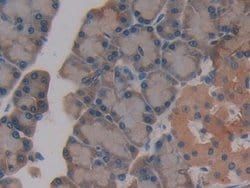
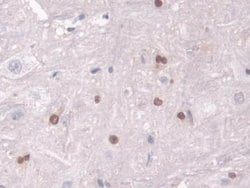
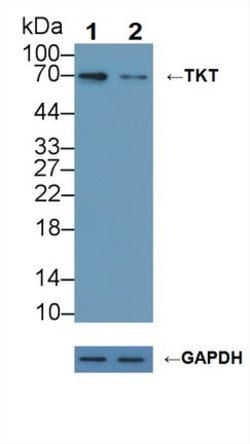
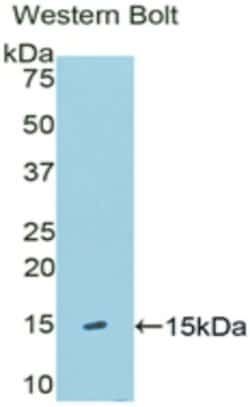
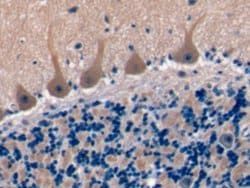
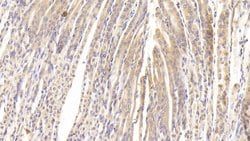
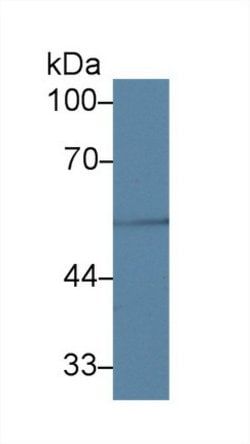
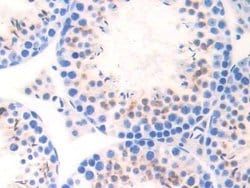
Immunocytochemistry, Immunohistochemistry (Paraffin), Western Blot
Concentration
500 μg/mL
Formulation
PBS with 50% glycerol and 0.05% ProClin 300
Gene Accession No.
P50343
Gene Symbols
Tpsb2
Immunogen
Recombinant protein Tryptase Beta 2. The antigen corresponds to amino acid range 30-274 of the target protein.
Quantity
20 μL
Primary or Secondary
Primary
Target Species
Rat
Product Type
Antibody
Isotype
IgG
Related Products
Description
- TPSB2 is a protein coding gene
- Tryptases comprise a family of trypsin-like serine proteases, the peptidase family S1
- Tryptases are enzymatically active only as heparin-stabilized tetramers, and they are resistant to all known endogenous proteinase inhibitors
- Several tryptase genes are clustered on chromosome 16p13.3
- These genes are characterized by several distinct features
- They have a highly conserved 3' UTR and contain tandem repeat sequences at the 5' flank and 3' UTR which are thought to play a role in regulation of the mRNA stability
- These genes have an intron immediately upstream of the initiator Met codon, which separates the site of transcription initiation from protein coding sequence
- This feature is characteristic of tryptases but is unusual in other genes
- The alleles of this gene exhibit an unusual amount of sequence variation, such that the alleles were once thought to represent two separate genes, beta II and beta III
- Beta tryptases appear to be the main isoenzymes expressed in mast cells, whereas in basophils, alpha-tryptases predominate
- Tryptases have been implicated as mediators in the pathogenesis of asthma and other allergic and inflammatory disorders.