PIPA5121536
TOR2A Polyclonal Antibody, Invitrogen™
Manufacturer: Thermo Scientific
Select a Size
| Pack Size | SKU | Availability | Price |
|---|---|---|---|
| Each of 1 | PIPA5121536-Each-of-1 | In Stock | ₹ 19,669.00 |
PIPA5121536 - Each of 1
In Stock
Quantity
1
Base Price: ₹ 19,669.00
GST (18%): ₹ 3,540.42
Total Price: ₹ 23,209.42
Antigen
TOR2A
Classification
Polyclonal
Conjugate
Unconjugated
Gene
TOR2A
Gene Alias
HEMBA1005096; Prosalusin; PSEC0218; Salusin-alpha; Salusin-beta; TOR2A; TORP1; Torsin family 2 member A; torsin family 2, member A; torsin-2A; Torsin-related protein 1; UNQ6408/PRO21181
Host Species
Rabbit
Purification Method
Antigen affinity chromatography
Regulatory Status
RUO
Gene ID (Entrez)
30933
Content And Storage
-20°C
Form
Liquid
Applications
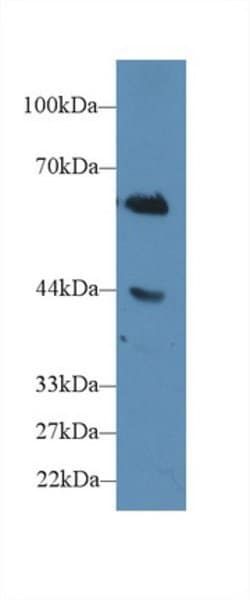
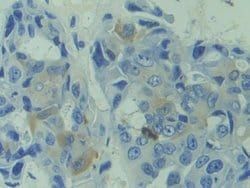
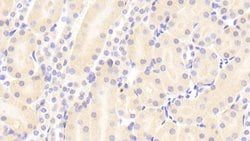
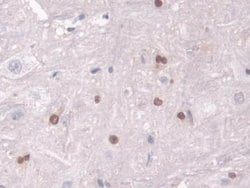
Immunocytochemistry, Immunohistochemistry (Paraffin), Western Blot
Concentration
0.49 mg/mL
Formulation
PBS with 50% glycerol and 0.05% ProClin 300
Gene Accession No.
Q8R1J9
Gene Symbols
TOR2A
Immunogen
Recombinant protein Torsin 2A. The antigen corresponds to amino acid range 125-313 of the target protein.
Quantity
20 μL
Primary or Secondary
Primary
Target Species
Mouse
Product Type
Antibody
Isotype
IgG
Related Products
Description
- Salusins are multifunctional bioactive peptides discovered by bioinformatics analyses of a full-length cDNA library
- Salusin alpha and salusin beta are related peptides of 28 and 20 amino acids that were recently characterized
- These peptides are considered to be biosynthesized from preprosalusin, an alternative-splicing product of the torsion dystonia-related gene (TOR2A), after frameshift reading and digestion at dibasic amino acids
- Salusin alpha has recently been shown to be involved in atherosclerosis; it potently suppresses acyl-CoA:cholesterol acyltransferase-1 which stores cholesterol ester converted from free cholesterol in macrophages, thereby reducing human macrophage foam cell formation.