PLB1 Polyclonal Antibody, Invitrogen™
Manufacturer: Thermo Scientific
Select a Size
| Pack Size | SKU | Availability | Price |
|---|---|---|---|
| Each of 1 | PIPA5121679-Each-of-1 | In Stock | ₹ 17,346.10 |
PIPA5121679 - Each of 1
In Stock
Quantity
1
Base Price: ₹ 17,346.10
GST (18%): ₹ 3,122.298
Total Price: ₹ 20,468.398
Antigen
PLB1
Classification
Polyclonal
Conjugate
Unconjugated
Gene
PLB1
Gene Alias
4632413E21Rik; 4930433E17Rik; 4930539A06Rik; BC033606; hPLB; Lysophospholipase; Phlpb; Phospholipase A2; phospholipase B; Phospholipase B/lipase; phospholipase B1; phospholipase B1, membrane-associated; PLB; PLB/LIP; PLB1
Host Species
Rabbit
Purification Method
Antigen affinity chromatography
Regulatory Status
RUO
Gene ID (Entrez)
151056
Content And Storage
-20°C
Form
Liquid
Applications
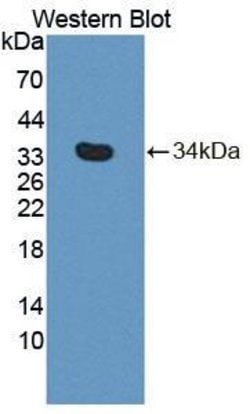
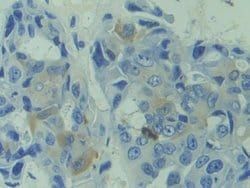
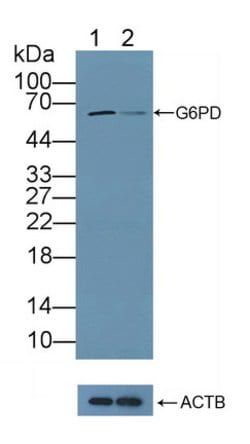
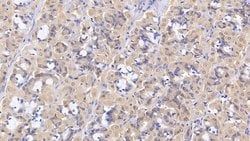
Immunocytochemistry, Immunohistochemistry (Paraffin), Western Blot
Concentration
1 mg/mL
Formulation
PBS with 50% glycerol and 0.05% ProClin 300
Gene Accession No.
Q6P1J6
Gene Symbols
PLB1
Immunogen
Recombinant protein Phospholipase B. The antigen corresponds to amino acid range 1036-1458 of the target protein.
Quantity
20 μL
Primary or Secondary
Primary
Target Species
Human
Product Type
Antibody
Isotype
IgG
Related Products
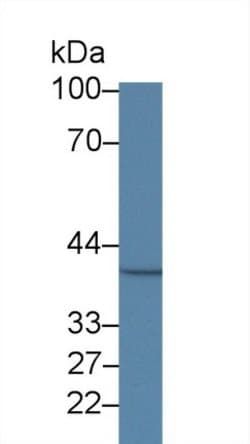
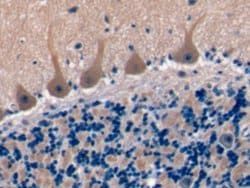
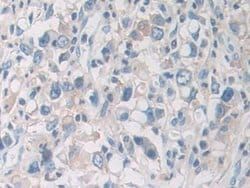
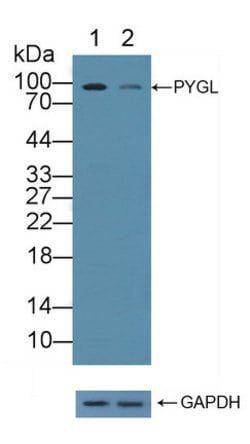
Description
- Description This gene encodes a membrane-associated phospholipase that displays lysophospholipase and phospholipase A2 activities through removal of sn-1 and sn-2 fatty acids of glycerophospholipids
- In addition, it displays lipase and retinyl ester hydrolase activities
- The encoded protein is highly conserved and is composed of a large, glycosylated extracellular domain composed of four tandem homologous domains, followed by a hydrophobic segment that anchors the enzyme to the membrane and a short C-terminal cytoplasmic tail
- This gene has been identified as a candidate rheumatoid arthritis risk gene.