PIPA5121811
KARS Polyclonal Antibody, Invitrogen™
Manufacturer: Thermo Scientific
Select a Size
| Pack Size | SKU | Availability | Price |
|---|---|---|---|
| Each of 1 | PIPA5121811-Each-of-1 | In Stock | ₹ 17,346.10 |
PIPA5121811 - Each of 1
In Stock
Quantity
1
Base Price: ₹ 17,346.10
GST (18%): ₹ 3,122.298
Total Price: ₹ 20,468.398
Antigen
KARS
Classification
Polyclonal
Conjugate
Unconjugated
Gene
KARS1
Gene Alias
AA589550; AL024334; AL033315; AL033367; CMTRIB; D8Ertd698e; D8Wsu108e; DFNB89; EC 6.1.1.6; KARS; Kars1; KARS2; KIAA0070; KRS; lysine tRNA ligase; lysine--tRNA ligase; LysRS; lysyl-tRNA synthetase; mKIAA0070
Host Species
Rabbit
Purification Method
Antigen affinity chromatography
Regulatory Status
RUO
Gene ID (Entrez)
3735
Content And Storage
-20°C
Form
Liquid
Applications
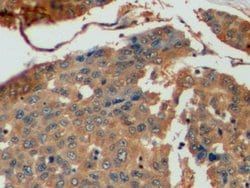
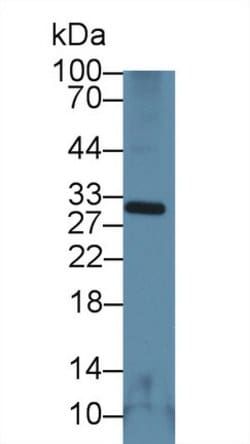
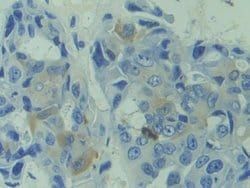
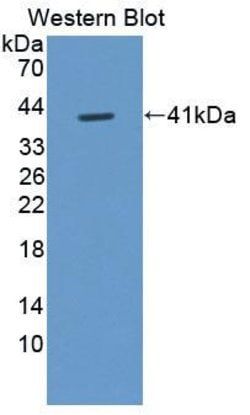
Immunocytochemistry, Immunohistochemistry (Paraffin), Western Blot
Concentration
500 μg/mL
Formulation
PBS with 50% glycerol and 0.05% ProClin 300
Gene Accession No.
Q15046
Gene Symbols
KARS1
Immunogen
Recombinant protein Lysyl tRNA Synthetase. The antigen corresponds to amino acid range 323-553 of the target protein.
Quantity
20 μL
Primary or Secondary
Primary
Target Species
Human
Product Type
Antibody
Isotype
IgG
Related Products
Description
- Aminoacyl-tRNA synthetases are a class of enzymes that charge tRNAs with their cognate amino acids
- Lysyl-tRNA synthetase is a homodimer localized to the cytoplasm which belongs to the class II family of tRNA synthetases
- It has been shown to be a target of autoantibodies in the human autoimmune diseases, polymyositis or dermatomyositis
- Alternatively spliced transcript variants encoding different isoforms have been found for this gene.