IL17RC Polyclonal Antibody, Invitrogen™
Manufacturer: Thermo Scientific
Select a Size
| Pack Size | SKU | Availability | Price |
|---|---|---|---|
| Each of 1 | PIPA5121828-Each-of-1 | In Stock | ₹ 17,346.10 |
PIPA5121828 - Each of 1
In Stock
Quantity
1
Base Price: ₹ 17,346.10
GST (18%): ₹ 3,122.298
Total Price: ₹ 20,468.398
Antigen
IL17RC
Classification
Polyclonal
Conjugate
Unconjugated
Gene
IL17RC
Gene Alias
1110025H02Rik; CANDF9; Gm19850; IL-17 receptor C; IL17F receptor; IL17RC; IL-17RC; IL17-RC; IL17Rhom; Il17rl; IL-17RL; IL17-RL; interleukin 17 receptor C; interleukin-17 receptor C; Interleukin-17 receptor homolog; interleukin-17 receptor-like protein; UNQ6118/PRO20040/PRO38901; ZcytoR14
Host Species
Rabbit
Purification Method
Antigen affinity chromatography
Regulatory Status
RUO
Gene ID (Entrez)
84818
Content And Storage
-20°C
Form
Liquid
Applications
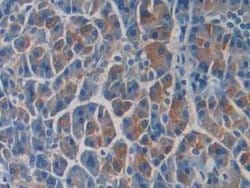
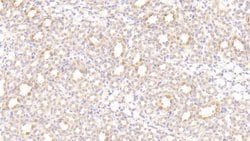
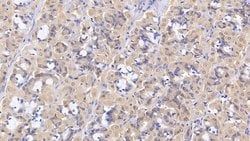
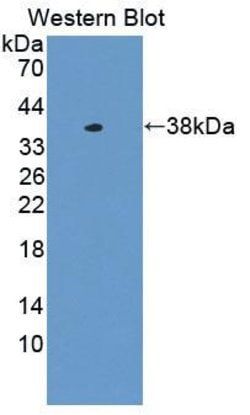
Western Blot
Concentration
1 mg/mL
Formulation
PBS with 50% glycerol and 0.05% ProClin 300
Gene Accession No.
Q8NAC3
Gene Symbols
IL17RC
Immunogen
Recombinant protein Interleukin 17 Receptor C. The antigen corresponds to amino acid range 257-477 of the target protein.
Quantity
20 μL
Primary or Secondary
Primary
Target Species
Human
Product Type
Antibody
Isotype
IgG
Related Products
Description
- This gene encodes a single-pass type I membrane protein that shares similarity with the interleukin-17 receptor (IL-17RA)
- Unlike IL-17RA, which is predominantly expressed in hemopoietic cells, and binds with high affinity to only IL-17A, this protein is expressed in nonhemopoietic tissues, and binds both IL-17A and IL-17F with similar affinities
- The proinflammatory cytokines, IL-17A and IL-17F, have been implicated in the progression of inflammatory and autoimmune diseases
- Multiple alternatively spliced transcript variants encoding different isoforms have been detected for this gene, and it has been proposed that soluble, secreted proteins lacking transmembrane and intracellular domains may function as extracellular antagonists to cytokine signaling.