PML Polyclonal Antibody, Invitrogen™
Manufacturer: Thermo Scientific
Select a Size
| Pack Size | SKU | Availability | Price |
|---|---|---|---|
| Each of 1 | PIPA512185-Each-of-1 | In Stock | ₹ 46,146.50 |
PIPA512185 - Each of 1
In Stock
Quantity
1
Base Price: ₹ 46,146.50
GST (18%): ₹ 8,306.37
Total Price: ₹ 54,452.87
Antigen
PML
Classification
Polyclonal
Formulation
PBS with 0.09% sodium azide
Gene Accession No.
P29590
Gene Symbols
PML
Immunogen
KLH conjugated synthetic peptide between 470-499 amino acids from human PML Sumoylation Site
Quantity
400 μL
Primary or Secondary
Primary
Target Species
Human
Product Type
Antibody
Isotype
IgG
Applications
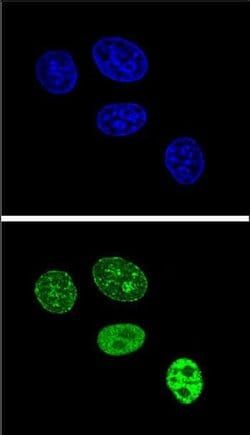
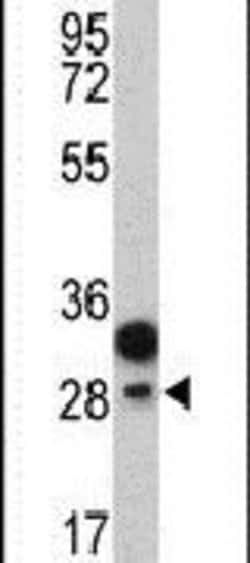
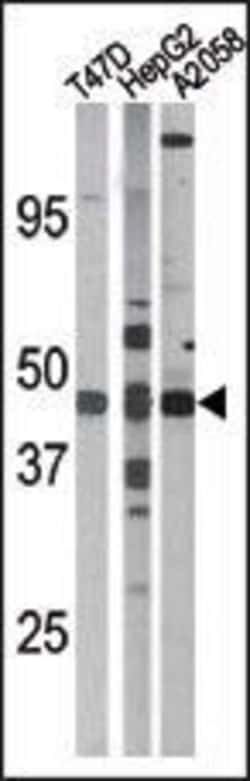
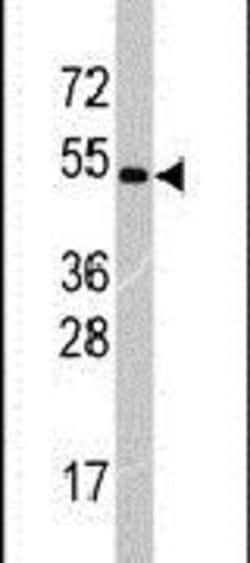
Flow Cytometry, Immunocytochemistry, Immunohistochemistry (Paraffin), Western Blot
Conjugate
Unconjugated
Gene
PML
Gene Alias
1200009E24Rik; AI661194; MYL; Pml; PML/RARA fusion; pml1; PP8675; probable transcription factor PML; promyelocytic leukemia; promyelocytic leukemia protein; promyelocytic leukemia, inducer of; protein PML; RGD1562602; RING finger protein 71; RNF71; TRIM19; tripartite motif protein TRIM19; tripartite motif-containing protein 19
Host Species
Rabbit
Purification Method
Antigen affinity chromatography, Protein A
Regulatory Status
RUO
Gene ID (Entrez)
5371
Content And Storage
-20° C, Avoid Freeze/Thaw Cycles
Form
Liquid
Related Products
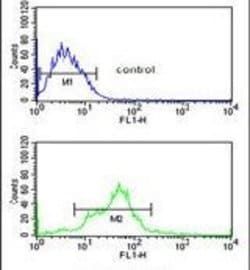
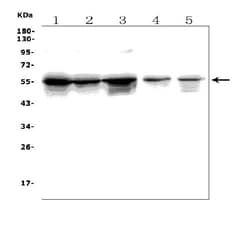
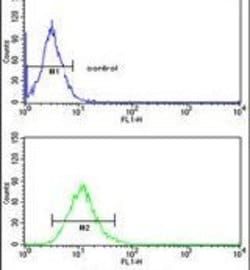

Description
- The protein encoded by this gene is one of two human homologs of Saccharomyces cerevisiae Rad23, a protein involved in nucleotide excision repair (NER)
- This protein was shown to interact with, and elevate the nucleotide excision activity of 3-methyladenine-DNA glycosylase (MPG), which suggested a role in DNA damage recognition in base excision repair
- This protein contains an N-terminal ubiquitin-like domain, which was reported to interact with 26S proteasome, as well as with ubiquitin protein ligase E6AP, and thus suggests that this protein may be involved in the ubiquitin mediated proteolytic pathway in cells.