HSPBP1 Polyclonal Antibody, Invitrogen™
Manufacturer: Thermo Scientific
Select a Size
| Pack Size | SKU | Availability | Price |
|---|---|---|---|
| Each of 1 | PIPA5121892-Each-of-1 | In Stock | ₹ 19,669.00 |
PIPA5121892 - Each of 1
In Stock
Quantity
1
Base Price: ₹ 19,669.00
GST (18%): ₹ 3,540.42
Total Price: ₹ 23,209.42
Antigen
HSPBP1
Classification
Polyclonal
Conjugate
Unconjugated
Gene
HSPBP1
Gene Alias
1500019G21Rik; FES1; Heat shock protein; heat shock protein-binding protein 1; HSP; hsp70 interacting protein; hsp70-binding protein 1; Hsp70-binding protein 2; hsp70-interacting protein; hsp70-interacting protein 1; Hsp70-interacting protein 2; HSPA (heat shock 70kDa) binding protein, cytoplasmic cochaperone 1; HSPA (Hsp70) binding protein 1; HSPA binding protein, cytoplasmic cochaperone 1; Hspbp; HSPBP1; HspBP2; LOW QUALITY PROTEIN: hsp70-binding protein 1; MGC128574 protein; PP1845; SPA ) binding protein, cytoplasmic cochaperone 1
Host Species
Rabbit
Purification Method
Antigen affinity chromatography
Regulatory Status
RUO
Gene ID (Entrez)
66245
Content And Storage
-20°C
Form
Liquid
Applications
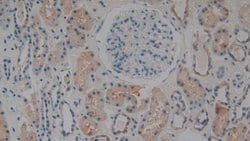
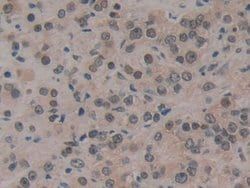
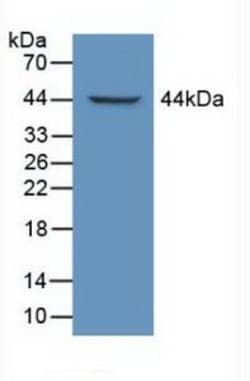
Immunohistochemistry (Paraffin), Western Blot
Concentration
500 μg/mL
Formulation
PBS with 50% glycerol and 0.05% ProClin 300
Gene Accession No.
Q99P31
Gene Symbols
HSPBP1
Immunogen
Recombinant protein Heat Shock 70kDa Binding Protein 1. The antigen corresponds to amino acid range 209-354 of the target protein.
Quantity
20 μL
Primary or Secondary
Primary
Target Species
Mouse
Product Type
Antibody
Isotype
IgG
Related Products
Description
- HspBP1 is an Hsp70-interacting protein that was first isolated from a human heart cDNA library using the yeast two-hybrid system
- The ATPase domain of Hsp70 binds HspBP1 and upon binding, inhibits Hsp70 chaperone activity
- More recently HspBP1 was found to promote nucleotide dissociation from Hsc70 (3) and is capable of altering the confirmation of the Hsp70 ATPase domain
- HspBP1 is capable of regulating any Hsp70 activity that requires ATPase.