PIPA5122170
Calumenin Polyclonal Antibody, Invitrogen™
Manufacturer: Thermo Scientific
Select a Size
| Pack Size | SKU | Availability | Price |
|---|---|---|---|
| Each of 1 | PIPA5122170-Each-of-1 | In Stock | ₹ 14,756.20 |
PIPA5122170 - Each of 1
In Stock
Quantity
1
Base Price: ₹ 14,756.20
GST (18%): ₹ 2,656.116
Total Price: ₹ 17,412.316
Antigen
Calumenin
Classification
Polyclonal
Conjugate
Unconjugated
Gene
Calu
Gene Alias
9530075H20Rik; CALU; Calumenin; Cbp50; CBP-50; Crocalbin; crocalbin-like protein; IEF SSP 9302; multiple EF-hand protein; Rcn; reticulocalbin
Host Species
Rabbit
Purification Method
Antigen affinity chromatography
Regulatory Status
RUO
Gene ID (Entrez)
813
Content And Storage
-20°C
Form
Liquid
Applications
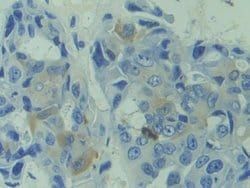
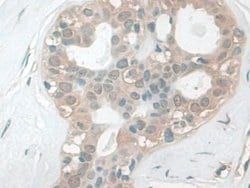
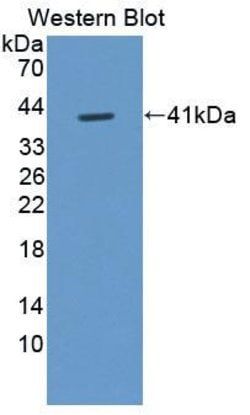
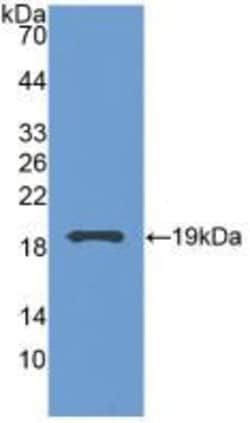
Immunocytochemistry, Immunohistochemistry (Paraffin), Western Blot
Concentration
500 μg/mL
Formulation
PBS with 50% glycerol and 0.05% ProClin 300
Gene Accession No.
O43852
Gene Symbols
Calu
Immunogen
Recombinant protein Calumenin. The antigen corresponds to amino acid range 20-315 of the target protein.
Quantity
20 μL
Primary or Secondary
Primary
Target Species
Human
Product Type
Antibody
Isotype
IgG
Related Products
Description
- Caluminin is a 315 amino acid Ca2+-binding member of the CREC, EF-hand protein family
- Calumenin is a secreted protein t hat contains six Ca2+-binding (EF-hand) motifs and is expressed in the lumen of the endoplasmic reticulum (ER) and Golgi apparatus
- In the presence of Ca2+, Calumenin interacts with serum amyloid P component (SAP) and, together, they may play a role in the immunological defense system and participate in amyloidosis, the pathological formation of amyloid deposits in different types of tissues
- Calumenin has an inhibitory effect on the vitamin K-dependent g-carboxylation system which converts vitamin K-dependent proteins to Gla-containing proteins
- Calumenin may also be involved in the pathophysiology of thrombosis and/or wound healing by acting in an autocrine or paracrine manner.