CEA Polyclonal Antibody, Invitrogen™
Manufacturer: Thermo Scientific
Select a Size
| Pack Size | SKU | Availability | Price |
|---|---|---|---|
| Each of 1 | PIPA513438-Each-of-1 | In Stock | ₹ 49,617.50 |
PIPA513438 - Each of 1
In Stock
Quantity
1
Base Price: ₹ 49,617.50
GST (18%): ₹ 8,931.15
Total Price: ₹ 58,548.65
Antigen
CEA
Classification
Polyclonal
Conjugate
Unconjugated
Gene
Ceacam5
Gene Alias
1600029H12Rik; Carcinoembryonic antigen; carcinoembryonic antigen related cell adhesion molecule 5; carcinoembryonic antigen-related cell adhesion molecule 5; CD66e; CEA; CEACAM5; Meconium antigen 100; OTTHUMP00000199033; pregnancy-specific glycoprotein 30; Psg30; sCD66e; soluble CD66e
Host Species
Rabbit
Purification Method
Affinity chromatography, Protein A
Regulatory Status
RUO
Gene ID (Entrez)
1048
Content And Storage
-20° C, Avoid Freeze/Thaw Cycles
Form
Liquid
Applications
Flow Cytometry, Immunohistochemistry (Paraffin), Western Blot
Concentration
0.44 mg/mL
Formulation
PBS with 0.09% sodium azide
Gene Accession No.
P06731
Gene Symbols
Ceacam5
Immunogen
KLH conjugated synthetic peptide between 400-429 amino acids from the central region of human CEA
Quantity
400 μL
Primary or Secondary
Primary
Target Species
Human
Product Type
Antibody
Isotype
IgG
Related Products
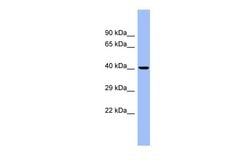
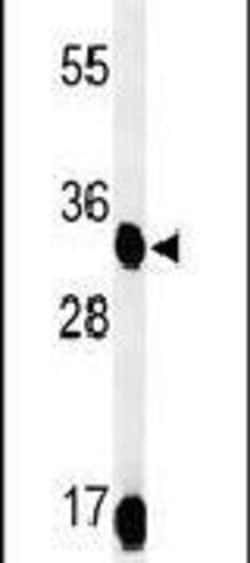
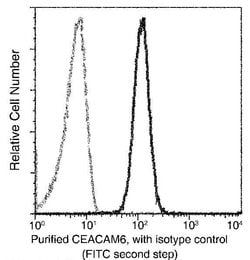

Description
- CEA (Carcino Embryonic Antigen, CD66e) is synthesized during development in the fetal gut, and re-expressed in increased amounts in intestinal carcinomas and several other tumors
- CEA is a member of carcinoembryonic antigens, immunoglobulin supergene family and consists of a single N domain (structural homology to the immunoglobulin variable) and six immunoglobulin constant-like A (A1, A2, A3) and B domains (B1, B2, B3)
- Antibodies to CEA are useful in identifying the origin of various metastatic adenocarcinomas and in distinguishing pulmonary adenocarcinomas (60 to 70% are CEA+) from pleural mesotheliomas (rarely or weakly CEA+)
- CEA is a member of a large family of glycoproteins, a useful tumor marker for adenocarcinoma, and found in adenocarcinomas of endodermally derived digestive system epithelium and fetal colon
- Two subgroups of the CEA family, the CEA cell adhesion molecules and the pregnancy-specific glycoproteins, are located within a 1.2 Mb cluster on the long arm of chromosome 19
- Eleven pseudogenes of the CEA cell adhesion molecule subgroup are also found in the cluster
- CEA was originally described in bile ducts of liver as biliary glycoprotein
- Subsequently, CEA was found to be a cell-cell adhesion molecule detected on leukocytes, epithelia, and endothelia
- The encoded protein mediates cell adhesion via homophilic as well as heterophilic binding to other proteins of the subgroup
- Multiple cellular activities have been attributed to the encoded protein, including roles in the differentiation and arrangement of tissue three-dimensional structure, angiogenesis, apoptosis, tumor suppression, metastasis, and the modulation of innate and adaptive immune responses
- Multiple transcript variants encoding different isoforms have been reported, but the full-length nature of all variants has not been defined.