PIPA5141076
INHA Polyclonal Antibody, Invitrogen™
Manufacturer: Thermo Scientific
Select a Size
| Pack Size | SKU | Availability | Price |
|---|---|---|---|
| Each of 1 | PIPA5141076-Each-of-1 | In Stock | ₹ 41,741.00 |
PIPA5141076 - Each of 1
In Stock
Quantity
1
Base Price: ₹ 41,741.00
GST (18%): ₹ 7,513.38
Total Price: ₹ 49,254.38
Antigen
INHA
Classification
Polyclonal
Conjugate
Unconjugated
Gene
INHA
Gene Alias
A inhibin subunit; A-inhibin subunit; AW555078; IHA; Inha; inhibin; inhibin alpha; inhibin alpha chain; inhibin alpha subunit
Host Species
Rabbit
Purification Method
Antigen affinity chromatography
Regulatory Status
RUO
Gene ID (Entrez)
16322, 24504, 3623
Content And Storage
Store at 4°C short term. For long term storage, store at -20°C, avoiding freeze/thaw cycles.
Isotype
IgG
Applications
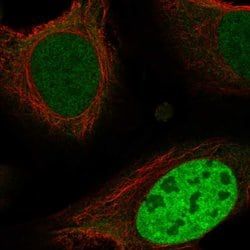
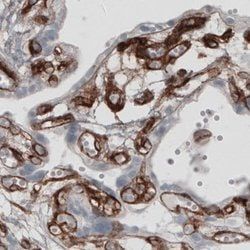
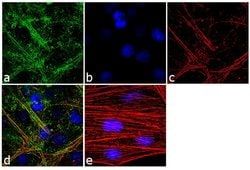
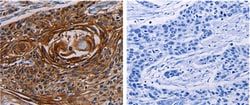
Immunocytochemistry, Western Blot
Concentration
1 mg/mL
Formulation
TBS with 0.2% BSA, 50% glycerol and 0.05% sodium azide; pH 7.4
Gene Accession No.
P05111, P17490, Q04997
Gene Symbols
INHA
Immunogen
Synthetic peptide within human Inhibin alpha aa 240-290.
Quantity
100 μL
Primary or Secondary
Primary
Target Species
Human, Mouse, Rat
Form
Liquid
Related Products
Description
- The inhibin alpha subunit joins either the beta A or beta B subunit to form a pituitary FSH secretion inhibitor
- Inhibin has been shown to regulate gonadal stromal cell proliferation negatively and to have tumor-suppressor activity
- In addition, serum levels of inhibin have been shown to reflect the size of granulosa-cell tumors and can therefore be used as a marker for primary as well as recurrent disease
- However, in prostate cancer, expression of the inhibin alpha-subunit gene was suppressed and was not detectable in poorly differentiated tumor cells
- Furthermore, because expression in gonadal and various extragonadal tissues may vary severalfold in a tissue-specific fashion, it is proposed that inhibin may be both a growth/differentiation factor and a hormone.